Fashion & beauty
The relationship between what we wear and who we are has never been more complex. Fashion and beauty have evolved from simple acts of covering and grooming into sophisticated forms of self-expression, cultural commentary, and even activism. Today’s landscape demands more than just knowing what looks good—it requires understanding the systems behind our choices, from supply chains and algorithms to heritage craftsmanship and viral trends.
This shift has created a paradox: we have unprecedented access to style inspiration and products, yet many feel overwhelmed by choices, skeptical of marketing claims, and uncertain about what truly aligns with their values and lifestyle. Whether you’re questioning the sustainability of your favorite brand, wondering if that trending piece will survive beyond next month, or trying to determine when technology helps versus hinders your style development, you’re navigating questions that didn’t exist a generation ago. This resource breaks down the essential frameworks for making informed, intentional choices in fashion and beauty.
Why Conscious Fashion Matters More Than Ever
The fashion industry is experiencing a fundamental identity crisis. What was once driven primarily by seasonal collections and aspirational advertising now faces demands for transparency, ethics, and authenticity. This transformation reflects a broader cultural shift: consumers increasingly view their wardrobes as extensions of their value systems rather than just aesthetic choices.
The Shift From Consumption to Self-Expression
Fast fashion operated on a simple premise: make trends accessible and disposable. But this model has collided with growing awareness of its environmental and human costs. The rejection of perfectionism in fashion—those impossibly curated, trend-driven looks—has given rise to a more personal approach. People now ask “Does this feel like me?” before “Is this on trend?”
This isn’t about abandoning newness or experimentation. Instead, it’s about grounding purchases in intentionality. Consider how you might approach building a music playlist: you don’t just add every currently popular song. You curate based on mood, taste, and meaning. Fashion decisions increasingly follow this same logic, where each piece plays a deliberate role in your personal narrative rather than simply reflecting what’s currently popular.
Verifying Brand Claims and Avoiding Greenwashing
As demand for ethical fashion grows, so does marketing designed to capitalize on it. Terms like “eco-friendly,” “sustainable,” and “conscious collection” appear everywhere, often with little substantive meaning behind them. Developing a methodology for verification has become essential.
Effective verification involves asking specific questions rather than accepting vague promises. When evaluating brand claims, consider these checkpoints:
- What percentage of their total production meets the stated standard, not just a limited capsule collection?
- Do they provide transparent information about factories, wages, and material sourcing?
- Are their sustainability claims certified by independent third parties rather than self-assessed?
- Do they address end-of-life for their products, or only focus on production methods?
The goal isn’t perfection—no brand operates flawlessly across all dimensions. Rather, it’s about recognizing the difference between genuine commitment and marketing traps designed to capture the “conscious consumer” demographic without substantive change.
How to Build a Wardrobe That Pays for Itself
One of the most practical shifts in modern fashion thinking involves moving from sticker price to true cost analysis. This approach transforms how we evaluate value, moving beyond the initial transaction to consider longevity, versatility, and cost per wear.
Calculating True Cost Per Wear
A $200 jacket worn 100 times costs $2 per wear. A $50 jacket worn five times costs $10 per wear. This simple math reveals that initial price tells only part of the value story. The challenge lies in accurately predicting how often you’ll actually wear something—and this is where many purchases go wrong.
Think of your wardrobe like a professional kitchen. A chef doesn’t buy every gadget, but invests in versatile, durable tools used daily. Similarly, the most valuable pieces in your wardrobe are those that integrate seamlessly into your actual life, not your aspirational one. Before purchasing, consider these reality checks:
- How many existing items in your closet does this work with?
- Does this fit into your actual daily routines, not just special occasions?
- Can you maintain it properly with your current lifestyle and resources?
- Does it address a genuine gap in your wardrobe or duplicate what you already own?
Timing Purchases Around Fashion Cycles
Understanding fashion cycles provides strategic advantages beyond simply waiting for sales. Seasonal transitions, production schedules, and trend lifecycles all create predictable patterns that savvy shoppers can leverage.
End-of-season clearances offer obvious savings, but mid-season purchases of classic pieces often provide better selection in exchange for minimal price premium. Meanwhile, trendy items depreciate rapidly—buying them at full price early in their cycle maximizes the window to wear them before they feel dated, while waiting means lower prices but shorter relevance.
The key is matching your purchasing strategy to the piece’s role in your wardrobe. Investment basics warrant different timing than experimental trend pieces, and understanding this distinction prevents both overpaying and missing opportunities.
Adapting Trends Without Losing Yourself
The acceleration of trend cycles, amplified by social media, creates a peculiar challenge: how do you stay current without becoming a costume of whatever’s currently viral? The answer lies in understanding trend mechanics and developing strong personal filters.
Understanding the Micro-Trend Lifecycle
Micro-trends follow a compressed but predictable pattern: emergence, peak saturation, and rapid decline. What makes them particularly tricky is their intensity—during peak saturation, a micro-trend can feel ubiquitous and timeless, making it easy to forget it emerged only weeks earlier.
Recognizing where a trend sits in its lifecycle helps you decide whether and how to engage with it. Early adoption offers novelty but risks investing in something that may not gain broader traction. Peak saturation provides social validation but often represents the worst time to buy, as decline follows quickly. Post-peak adoption allows for discounted entry if you genuinely love the aesthetic, understanding it won’t carry cultural currency.
The critical question isn’t whether to follow trends, but which ones deserve your resources and why. Some micro-trends introduce you to silhouettes or colors that genuinely expand your style vocabulary. Others are purely contextual—interesting to observe but irrelevant to your actual life.
Filtering What Works for Your Life
This is where differentiating between style and fashion becomes crucial. Fashion is collective and temporal—what’s current, what’s trending, what’s being pushed by industry and media. Style is individual and consistent—how you translate fashion into something authentically yours.
Developing effective filters requires honest assessment of your body, lifestyle, and aesthetic preferences. That viral oversized blazer might look spectacular on social media but feel costume-like in your actual professional environment. Those delicate, high-maintenance pieces might align with your aesthetic but clash with your reality of a hectic schedule and minimal time for specialized care.
The goal isn’t to ignore trends entirely, but to adapt them through your personal lens. Take the element that resonates—perhaps a color palette, a silhouette, or a styling approach—and integrate it in ways that feel natural rather than borrowed.
Technology’s Impact on How We Shop and Style
Algorithms now play an outsized role in shaping what we see, what we buy, and what we consider stylish. Understanding this influence—and its limitations—has become a necessary literacy for navigating modern fashion.
Decoding Recommendation Algorithms
Recommendation engines operate on pattern recognition: they analyze your past behavior and the behavior of similar users to predict what you’ll like. This creates a feedback loop that can be helpful or limiting, depending on how you engage with it.
These systems excel at efficiency—surfacing options aligned with your established preferences faster than manual browsing. They struggle with context, nuance, and growth. An algorithm doesn’t know you’re trying to evolve your style, that you bought something as a gift, or that your mood and needs vary by situation. It simply sees data points and optimizes for engagement and conversion.
This creates what researchers call “filter bubbles”—you see increasingly narrow representations of what the algorithm determines you like, which can stagnate style development and limit exposure to new aesthetics. Being aware of this dynamic allows you to consciously seek variety and novelty outside your personalized feeds.
When to Trust the App and When to Trust Yourself
Styling apps and virtual try-on tools offer genuine utility for specific tasks: visualizing combinations from your existing wardrobe, planning outfits for trips, or experimenting with unfamiliar colors and silhouettes risk-free. They provide a low-stakes testing ground for ideas before committing resources.
However, technology cannot replicate the human judgment involved in how something makes you feel, how it moves with your body, or how it reads in person versus on screen. Fabric weight, drape, texture, and the subtle adjustments you make throughout the day—these elements remain firmly in the physical realm.
The most effective approach balances both: use technology for inspiration, organization, and initial filtering, but reserve final decisions for in-person evaluation when possible. Think of apps as research tools rather than replacement for embodied experience.
Fashion as Art: The Case for Investment Pieces
Beyond trends and utility lies another dimension of fashion: pieces that represent cultural heritage, artistic achievement, and historical significance. These items occupy a different category entirely, valued not just for wearability but for their place in fashion history.
Heritage, Provenance, and Cultural Value
Certain fashion houses operate as cultural institutions, preserving techniques, traditions, and artistic legacies that extend far beyond commerce. Understanding the lineage of fashion houses—their founders’ visions, signature techniques, and historical contributions—adds depth to how we perceive their work.
A vintage piece from a significant collection or designer carries stories and context that new items cannot replicate. This is where provenance becomes crucial: verified history of ownership, production details, and authentication increase both cultural and monetary value. The auction market for significant fashion pieces functions similarly to fine art, with rarity, condition, historical importance, and designer significance all factoring into valuation.
This level of engagement isn’t necessary or relevant for everyone, but understanding it exists creates appreciation for fashion’s artistic dimensions beyond seasonal consumption.
Caring for Collectible Garments
Investment pieces require investment in maintenance. Delicate fabrics, intricate construction, and historical materials demand specialized care that standard cleaning methods can damage. Understanding proper storage—controlling light exposure, humidity, and temperature—becomes essential for preservation.
This might involve archival tissue paper, breathable garment bags, padded hangers, and climate control. For truly valuable pieces, professional conservation services offer expertise in handling fragile textiles and historical garments. The effort required naturally limits what can realistically be maintained as collectible versus simply worn and enjoyed.
The decision to invest at this level should factor in not just acquisition cost but ongoing care requirements. A beautiful vintage piece that demands conditions you cannot provide may be better appreciated through museum exhibitions than personal ownership.
Fashion and beauty encompass far more than surface aesthetics. They intersect with ethics, economics, technology, culture, and personal identity in increasingly complex ways. The path forward isn’t about perfect choices or comprehensive knowledge, but about developing frameworks for intentional decision-making aligned with your values, lifestyle, and resources. Whether you’re drawn to conscious consumption, strategic value, trend adaptation, or cultural preservation, understanding the systems at play empowers you to engage with fashion and beauty on your own terms.
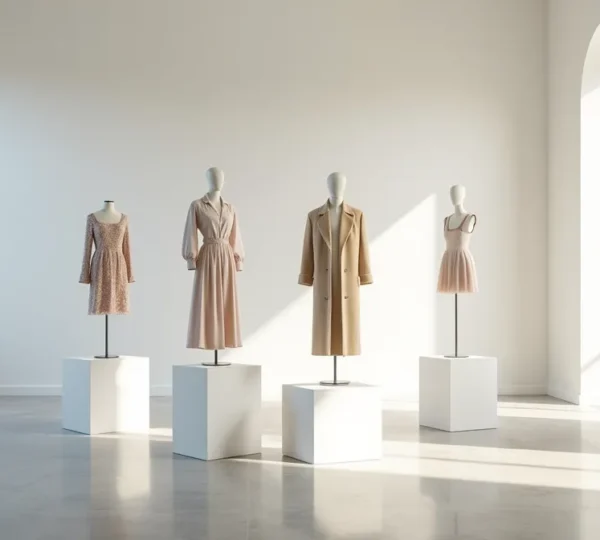
The Investment Potential of Vintage Haute Couture
Vintage haute couture is increasingly viewed not as mere clothing, but as a high-performance tangible asset delivering non-correlated returns. Value is driven by verifiable scarcity and historical significance, not fleeting fashion trends. The vast gap in craftsmanship between true couture…
Read more
Can Algorithms Dress You Better Than a Stylist?
The debate isn’t about AI replacing human stylists; it’s about shifting the user’s role from a passive consumer to an active data translator. An AI’s ability to understand your taste is limited by its initial focus on object recognition, not…
Read more
How to Adopt Viral Trends Without Becoming a Fashion Victim
The secret to staying stylish isn’t chasing trends; it’s building a personal system to decide which trends are right for you. Embrace the 80/20 wardrobe rule: 80% timeless foundations, 20% trend-led pieces. Deconstruct trends into silhouette, color, and texture before…
Read more
Why Modern Aesthetics Are Shifting Towards Radical Authenticity?
Radical authenticity is the new luxury, shifting focus from fleeting trends to strategic ‘aesthetic asset management’. This means treating your wardrobe as a portfolio, prioritizing timeless pieces with proven value retention over disposable fast fashion. Ethical sourcing and understanding ‘cost…
Read more