In summary:
- Stop forcing compromises; start building a modular itinerary with parallel activities.
- Balance individual freedom and group bonding by creating “parallel tracks” for different interests and “anchor moments” where everyone reconnects.
- Apply a modular system to every aspect of planning, from budget and packing to safety protocols and first-aid kits.
- The key is to manage logistics so effectively that diverse interests become a trip’s greatest strength, not its biggest weakness.
As a group’s designated trip leader, you face a familiar dilemma: how do you create one itinerary that satisfies the friend who wants to hike a volcano at sunrise and the one whose only goal is to read a book by the pool? The conventional wisdom suggests communication and compromise, which often translates to everyone feeling slightly disappointed. You might try voting on activities, but that risks creating a dissatisfied minority. With travel trends showing a significant 23% increase in bookings for groups of eight or more people, this logistical challenge is more common than ever.
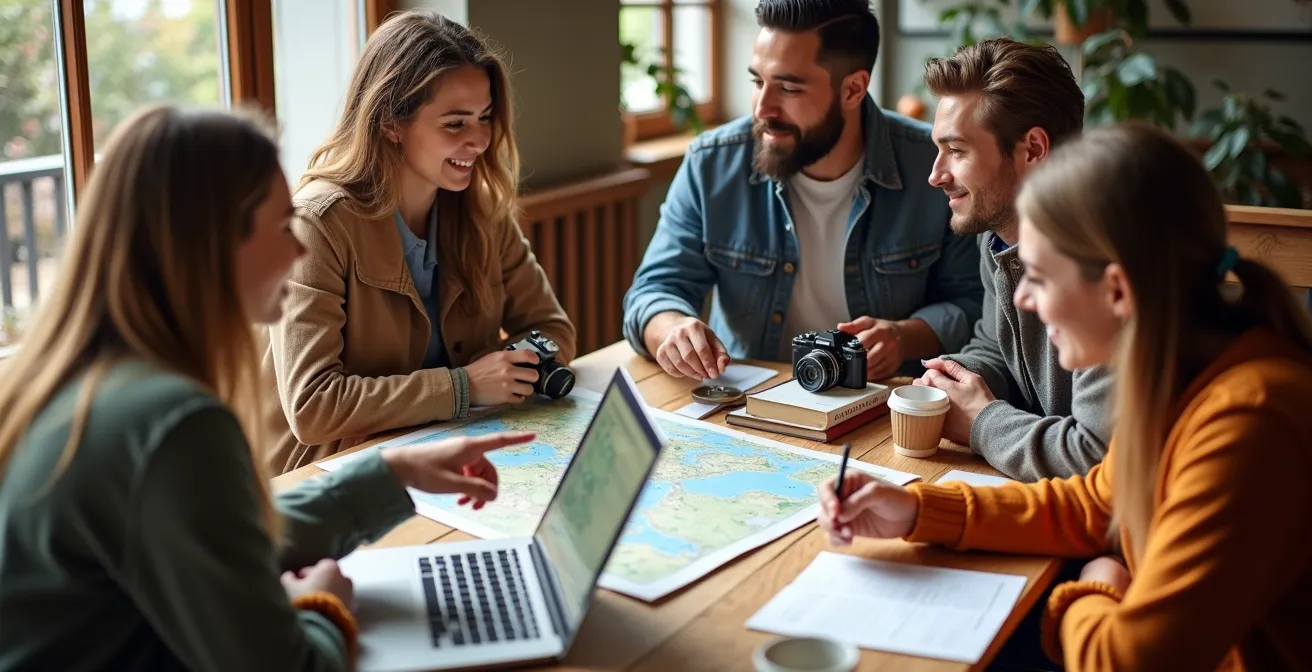
But what if the solution wasn’t compromise, but a superior system of organization? The secret to a successful multi-interest group trip—a ‘Trifecta’ trip balancing adventure, relaxation, and culture—is not to water down the experience for everyone. It’s to build a meticulously engineered itinerary of parallel, modular experiences. This framework allows different subgroups to pursue their passions independently while ensuring the entire group reconnects for key “anchor moments” that build shared memories. This approach transforms the trip leader’s role from a conflict mediator to a master logistician.
This guide provides that logistical system. We’ll move beyond generic advice and give you a structured framework to manage budget conflicts, prevent travel burnout, pack efficiently for diverse activities, and ensure everyone stays safe and happy. By embracing a modular mindset, you can turn your group’s conflicting interests into its greatest asset, ensuring every traveler returns home feeling their needs were not just met, but celebrated.
To help you navigate these complex logistics, this article breaks down the essential components of planning a successful ‘Trifecta’ trip. Each section addresses a specific challenge, providing a structured, solution-oriented approach to ensure a seamless experience for everyone.
Summary: How to Plan the Perfect ‘Trifecta’ Trip That Satisfies Every Traveler
- Splurge or Save: When to Pay for a Guide vs DIY?
- The ‘Travel Burnout’ Mistake: Overscheduling Your First Day
- Carry-On Only: Packing for Hiking and Fine Dining?
- Solo Female Travel: Safety Protocols for Remote Areas
- The Post-Travel Crash: Why You Feel Depressed Returning Home?
- Merino vs Synthetic: Which Base Layer Keep You Warmest?
- Why Click-and-Collect Is Safer Than Home Delivery?
- How to Build a Wilderness First Aid Kit for Sports?
Splurge or Save: When to Pay for a Guide vs DIY?
The first and often most contentious part of group travel planning is the budget. With the average traveler spending $1,598 per trip when with others, aligning different financial outlooks is critical. The “splurger” in your group might see a private guide for a historical tour as an essential investment, while the “saver” sees it as an unnecessary expense. Forcing a decision either way creates resentment. The solution is to approach this not as an all-or-nothing choice, but as a strategic allocation of a shared resource pool. The goal is to agree on a baseline budget for shared costs like accommodation and transport, then create a framework for optional, add-on expenses.
The role of the tour leader is to facilitate this discussion transparently. A great method is to use a decision matrix to evaluate the return on investment for major expenses. This moves the conversation from personal opinion to objective criteria. By analyzing factors like time saved, access to exclusive knowledge, and overall flexibility, the group can collectively decide where a guide offers indispensable value versus where a do-it-yourself approach is more practical and cost-effective. This allows for a hybrid model, where you might hire a guide for a complex activity like a jungle trek but explore a city’s markets on your own.
This comparative approach helps objectify spending and find a middle ground that respects everyone’s financial comfort zone. The following table provides a clear framework for making these crucial decisions together.
| Factor | Hire a Guide | DIY Approach | Hybrid Model |
|---|---|---|---|
| Cost | Higher upfront | Lower total cost | Moderate |
| Time Investment | Minimal planning | Extensive research | Moderate planning |
| Local Insights | Expert knowledge | Limited | Key moments only |
| Flexibility | Structured | Complete freedom | Best of both |
| Group Satisfaction | Universal but costly | Variable | Balanced compromise |
The ‘Travel Burnout’ Mistake: Overscheduling Your First Day
One of the fastest ways to sabotage group harmony is to overschedule the first day. After long-haul flights and time zone changes, travelers have vastly different energy levels. Forcing a packed itinerary on everyone is a recipe for exhaustion and irritability. Recent data from the events industry confirms this, showing that 42.1% of buyers cite overscheduling as their biggest challenge, leading to widespread burnout. The same principle applies to travel. The key is to design the first 24 hours around flexibility and choice, establishing the “parallel tracks” model that will define the rest of the trip.
Instead of a rigid schedule, create three optional “arrival tracks” for the first afternoon: one for the high-energy explorers (e.g., a guided neighborhood walk), one for the mid-energy group (e.g., relaxing at a local cafe), and one for those needing to recharge (e.g., napping or using hotel amenities). This empowers each person to listen to their body. The only mandatory event of the day should be a low-key “anchor moment” in the evening, like a group dinner at a nearby restaurant. This ensures everyone connects without feeling pressured.

As you can see, a successful arrival is about creating an environment of calm and choice, not a frantic race to check off sights. This approach sets a positive, respectful tone for the entire vacation. Use the following checklist to structure a first day that energizes, rather than drains, your group.
Action Plan: Structuring Your First Day
- Identify Profiles: Before departure, have each traveler identify their likely arrival energy level (e.g., ‘Ready to Explore’, ‘Need to Settle In’, ‘Must Recharge’).
- Inventory Options: Create a short list of 3-5 low-stress, optional activities located within walking distance of your accommodation (e.g., park, local market, cafe, museum).
- Align with Tracks: Assign the inventoried options to your three energy tracks (Explore, Relax, Recharge) to create clear, parallel choices for the group.
- Set Anchor Point: Define one mandatory, low-effort ‘anchor activity’ for the evening, such as a casual group dinner, to ensure everyone reconnects and bonds.
- Communicate the Plan: Share the flexible track options and the single mandatory anchor point with the group in advance, allowing individuals to choose their own pace without feeling left out.
Carry-On Only: Packing for Hiking and Fine Dining?
The “Trifecta” trip—balancing hiking, city exploration, and nice dinners—presents a significant packing challenge, especially for those aspiring to travel with only a carry-on. The key is to shift from packing individual outfits to creating a modular packing system. This involves thinking of your clothes and gear in terms of ‘activity modules’ rather than single items. Use compression packing cubes to create these modules: one for hiking gear, one for city wear, and one for evening attire.
The core of this system is the use of ‘bridge garments’—versatile pieces that can function across multiple modules. A high-quality merino wool t-shirt, for instance, works as a base layer for a hike but also looks smart under a blazer for dinner. Similarly, a pair of stylish, dark-colored, quick-dry travel pants can be suitable for a light trail and a casual restaurant. The goal is to maximize versatility and minimize redundancy.
Finally, implement a ‘group gear pool’ strategy. Not everyone needs to pack their own first-aid kit, power bank, or hairdryer. Create a shared list of communal items and assign one to each traveler. Everyone should still be responsible for their own daypack for personal essentials, but pooling larger items frees up significant space in each person’s luggage. For highly specialized gear like trekking poles or a formal jacket, research rental options at your destination to avoid packing bulky, single-use items.
Solo Female Travel: Safety Protocols for Remote Areas
A modular itinerary that includes “parallel tracks” inherently means there will be times when individuals or smaller groups explore on their own. This freedom is a huge benefit, but it requires a robust safety framework, especially when travelers may be in unfamiliar or remote areas. While this is important for everyone, data shows it’s a primary concern for women, with research indicating that 66% of solo female travelers worry about personal safety. A well-defined safety protocol isn’t about restriction; it’s about empowerment, enabling confident solo exploration within the larger group structure.
Implement a three-layer safety system for the group. The first layer is digital: use a location-sharing app (like WhatsApp’s Live Location or Find My Friends) and establish mandatory check-in times for anyone exploring alone. The second layer is social: even during solo exploration periods, encourage a buddy system where two people can branch off together. If someone truly wants to be alone, they should have a designated “check-in buddy” in the group who they text at pre-agreed intervals.
The third layer is environmental awareness. Before the trip, the group leader should research and define ‘Green Zones’ (safe to explore alone anytime), ‘Yellow Zones’ (explore with a buddy or during daylight hours), and ‘Red Zones’ (avoid altogether or only visit with the entire group). This simple system provides clear, objective guidelines that reduce anxiety and minimize risk. These protocols are not meant to limit adventure but to provide the secure foundation that makes true freedom possible.
The Post-Travel Crash: Why You Feel Depressed Returning Home?
The trip doesn’t end when you land back home. Many travelers experience the “post-travel crash,” a feeling of deflation or mild depression upon returning to routine life. This happens because a great trip is a peak experience filled with novelty, connection, and stimulation. The abrupt return to normalcy can feel like a significant loss. A proactive trip leader can mitigate this by treating the re-entry phase as the final, and equally important, module of the travel experience.
The key is to schedule the transition rather than letting it happen abruptly. Before the trip even ends, plan a group reunion dinner for one week after returning. This creates a concrete future event to look forward to and provides a dedicated space to reminisce and share stories once the dust has settled. It extends the communal feeling of the trip and softens the landing back into reality. This simple act transforms the end of the vacation from a hard stop into a gradual taper.
Further, gamify the post-trip experience. Create a shared digital photo album and set a fun deadline for everyone to upload their top 10 photos. You can also create a ‘trip-inspired challenge,’ like having everyone attempt to cook a dish they discovered on their travels and share the results. These small, structured activities keep the group connected and the spirit of the trip alive. By planning for the re-entry, you ensure the memories and bonds you’ve made become a lasting source of joy, not a reminder of a bygone adventure.
Merino vs Synthetic: Which Base Layer Keep You Warmest?
For the “adventure” module of your Trifecta trip, gear choices are critical. The debate between merino wool and synthetic base layers is a classic example of a small decision with a big impact on comfort and enjoyment, especially in variable weather. This isn’t just about warmth; it’s about performance under different conditions. Understanding the trade-offs helps the ‘adventurous’ members of your group make an informed choice that aligns with the specific activities planned.
Merino wool is the champion of temperature regulation and odor resistance. Its natural fibers can absorb a significant amount of moisture before feeling wet, and they continue to insulate even when damp. This makes it ideal for multi-day treks or situations where you might be sweating one minute and standing still in the cold the next. Its superior ability to resist odor-causing bacteria means you can wear it for several days without issue—a huge advantage for minimalist packing.
Synthetic fabrics (like polyester or polypropylene) excel in one key area: drying speed. They wick moisture away from the skin and dry exceptionally fast, making them perfect for high-intensity activities where you expect to sweat a lot, like a strenuous trail run. However, they are notorious for retaining odor and offer less warmth when wet compared to wool. For a Trifecta trip, the choice depends on the activity’s nature. The following table breaks down the decision for your group’s adventurers.
| Factor | Merino Wool | Synthetic | Best For |
|---|---|---|---|
| Warmth When Wet | Excellent | Good | Variable weather |
| Odor Resistance | Superior | Poor | Multi-day wear |
| Drying Speed | Slow | Fast | High-activity days |
| Versatility | High | Moderate | Trifecta trips |
| Price | $80-150 | $30-60 | Budget consideration |
Why Click-and-Collect Is Safer Than Home Delivery?
In travel planning, the “Click-and-Collect” concept isn’t about shopping; it’s a powerful metaphor for a flexible and empowering activity-planning system. Instead of the trip leader “delivering” a rigid, one-size-fits-all itinerary to the group, you create a curated menu of pre-vetted, and often pre-booked, options. Group members can then “collect” the experiences that most appeal to them. This logistical strategy is the cornerstone of executing a successful modular itinerary, providing both structure and freedom.
Here’s how it works in practice: The trip leader does the heavy lifting upfront. You research and secure flexible bookings for a variety of activities—museum passes with open-ended entry times, bike rentals, cooking classes, or guided tours. You compile these into a shared ‘activity menu’ using a collaborative planning app like Pilot or a simple shared document. Each option includes the cost, time commitment, and what ‘traveler type’ it might appeal to (e.g., “For the Foodie,” “For the Thrill-Seeker”).
Then, group members can ‘shop’ from this menu. A couple might decide to “collect” the art museum passes for Tuesday afternoon, while another small group books the cooking class. Because you’ve built in cancellation flexibility and pre-vetted the quality, you eliminate the risks of last-minute planning while still giving everyone agency over their schedule. This system elegantly solves the dilemma of pleasing diverse tastes, turning the itinerary from a mandate into a personalized journey.
Key Takeaways
- A successful group trip relies on a modular system with parallel activities, not forced compromises.
- Balance group cohesion with individual freedom by designing the itinerary around “parallel tracks” for different interests and “anchor moments” where everyone reconnects.
- Apply the modular concept to all logistics, from the itinerary and budget to packing, gear choices, and safety kits.
How to Build a Wilderness First Aid Kit for Sports?
Just as your itinerary is modular, so should be your preparation. For a ‘Trifecta’ trip involving sports and varied environments, a single, generic first-aid kit is inadequate. A far more effective approach is to build a modular first-aid kit, with components tailored to the specific risks of each planned activity and environment. This ensures you are prepared for likely scenarios without carrying unnecessary bulk. It’s the ultimate expression of solution-oriented planning.
Structure your kit around three core modules, mirroring the trip’s activities. The ‘Wilderness Module’ should contain items for hiking or sports-related injuries: blister treatments (moleskin), antiseptic wipes, bandages, insect repellent, and any necessary altitude or allergy medications. The ‘Urban Module’ addresses city-life issues: pain relievers for sore feet after a day of walking, antihistamines for unexpected food reactions, and band-aids for minor cuts. Finally, the ‘Relaxation Module’ handles comfort: motion sickness bands for boat trips or winding roads, digestive aids, and perhaps a non-drowsy sleep aid to help with jet lag.
To implement this efficiently, assign responsibility for each module to a different traveler, ideally someone with relevant experience (e.g., the seasoned hiker manages the wilderness kit). This not only distributes the packing load but also fosters a sense of shared responsibility for the group’s well-being. This methodical approach to safety preparation ensures that no matter which “parallel track” a person is on—be it climbing a mountain or exploring a market—they have access to the right supplies.
Start applying this modular framework today to build your next group itinerary, transforming logistical headaches into a seamless, enjoyable experience for everyone involved.