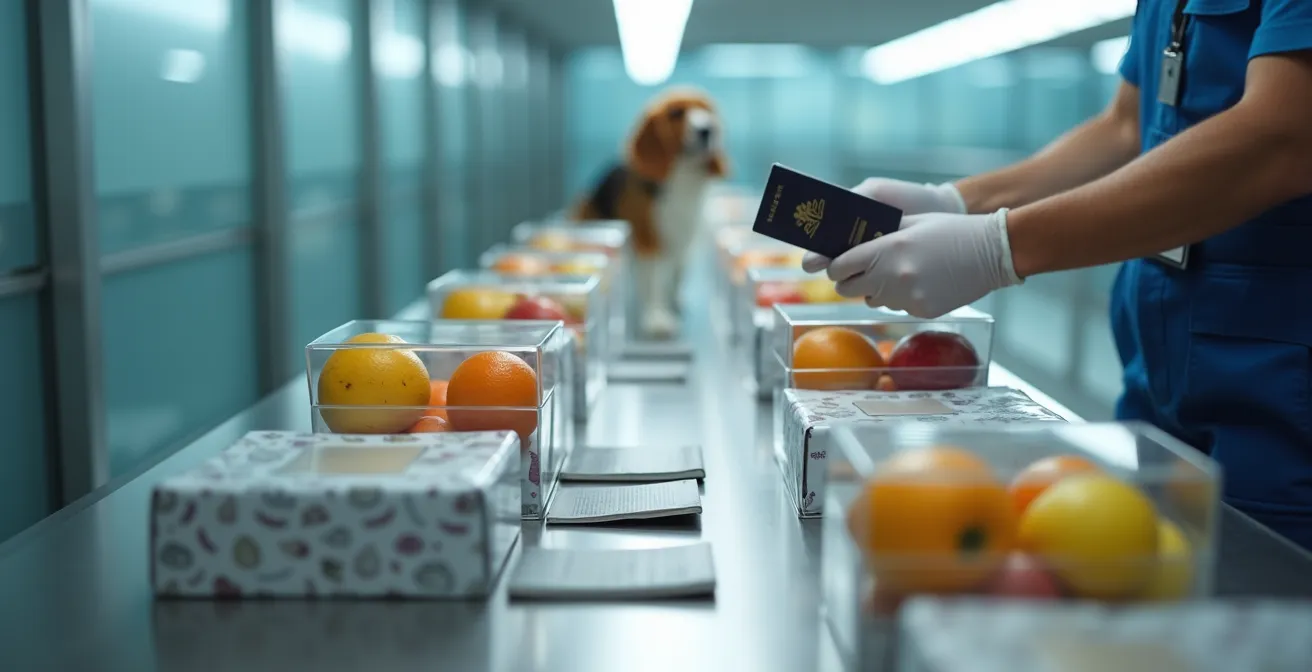
Successfully bringing food souvenirs into the U.S. is not a matter of luck, but a function of understanding and respecting the nation’s legal biosecurity framework.
- Every food import rule is designed to mitigate a specific agricultural or public health risk, not to arbitrarily penalize travelers.
- Commercially packaged, thoroughly processed, and properly documented items present a lower risk profile and have the highest chance of admissible entry.
Recommendation: Always declare every food item without exception. The civil penalty for failure to declare significantly outweighs the potential for confiscation of a non-admissible good.
For the avid foodie traveler, the greatest souvenir is often edible: a wheel of aged cheese from a Parma market, freshly foraged mushrooms from a Tuscan forest, or a rare spice blend discovered in a Moroccan souk. The desire to bring these authentic tastes home is powerful, yet it is met with the formidable and often confusing barrier of U.S. Customs and Border Protection (CBP). Many travelers operate on hearsay and hope, packing their luggage with culinary treasures while dreading the possibility of confiscation and fines. This approach is fundamentally flawed and fraught with unnecessary risk.
The common advice—”just declare it” or “avoid fresh meat”—is correct but insufficient. It fails to address the core legal principle governing all food imports: biosecurity. The United States’ agricultural import regulations are not arbitrary; they constitute a complex defense system against foreign pests and diseases that could devastate the nation’s crops and livestock. Understanding the ‘why’ behind these rules is the only way to navigate them effectively. It transforms the traveler from a potential transgressor into a compliant importer who can proactively demonstrate that their souvenirs pose no threat.
This guide abandons guesswork in favor of a legalistic framework. It examines the specific risks associated with different types of food, from foraged goods to processed products, and outlines the documented procedures for legal importation. By understanding the logic of risk mitigation, you can make informed decisions before you even make a purchase, ensuring your culinary memories are the only thing you bring home from your travels—not a hefty penalty.
To navigate this complex legal landscape, this article breaks down the regulations by category. The following sections provide a detailed examination of the rules governing everything from wild fungi to street food, helping you understand your obligations as an importer of personal goods.
Summary: A Legal Guide to Importing Food Souvenirs
- Mushroom Foraging: The Beginner Mistake That Can Be Fatal
- Farm-to-Table or Farm-to-Truck: Is the Menu Lying?
- Saffron and Vanilla: How to Tell Real Spice from Fake?
- Cook or Eat: Is a Cooking Class Worth Your Vacation Time?
- Truffle Season: When to Go for the Best Prices and Flavor?
- Shipping Delays: What ‘Shipped from Overseas’ Really Means?
- Street Food 101: How to Eat Locally Without Getting Sick?
- Why Third-Culture Cuisine Is the Future of Gastronomy?
Mushroom Foraging: The Beginner Mistake That Can Be Fatal
Foraging for wild edibles, particularly mushrooms, is the epitome of connecting with a region’s terroir. However, from a biosecurity perspective, foraged goods represent one of the highest-risk categories for importation. The primary concern is not the toxicity of the mushroom to the consumer—that is a personal risk—but the potential for the item to act as a vector of contamination. Soil, insects, and microscopic spores attached to fresh fungi can carry invasive pests or plant diseases.
The U.S. Department of Agriculture (USDA) and CBP take this threat with utmost seriousness. The economic consequences of a single agricultural pest introduction can be catastrophic. For instance, it is documented that the 1980s Mediterranean fruit fly outbreak cost California and federal authorities over $100 million. It is this level of potential damage that informs the stringent inspection of all agricultural products, especially those sourced directly from the wild. Failing to declare foraged items is viewed as a significant breach of these protective measures.
Therefore, the “fatal mistake” is not merely misidentifying a mushroom, but failing to mitigate and declare the biosecurity risk it represents. Any foraged item must be presented to CBP for inspection. To increase the likelihood of admissibility, travelers must take proactive steps to clean, prepare, and document their findings.
Your Action Plan: Verifying Foraged Goods for Transport
- Thorough Cleaning: Clean all foraged items meticulously to remove every visible particle of soil before packing. Soil is strictly prohibited.
- Drying Process: Dry mushrooms completely if possible. Dried goods generally face fewer restrictions than fresh ones as the drying process eliminates many potential pests.
- Provenance Documentation: Keep your original collection notes, including the date, specific location, and species identification, to present to inspectors.
- Inspection-Ready Packaging: Pack items in clear, resealable bags. This facilitates easy visual inspection by CBP officers without requiring them to handle the items excessively.
- Declaration Protocol: Declare all foraged items on the customs form using specific terminology like “dried wild mushrooms” or “foraged plants for personal consumption.”
Farm-to-Table or Farm-to-Truck: Is the Menu Lying?
The term “farm-to-table” evokes images of fresh, locally sourced ingredients. For a traveler, this often translates to purchasing products like cheese, cured meats, or olive oil directly from the producer. While these items feel more authentic, their admissibility into the U.S. depends entirely on their processing, packaging, and contents. The romantic notion of a rustic, unwrapped food souvenir is often at direct odds with biosecurity laws. Commercial processing and packaging are not signs of inauthenticity; they are crucial components of risk mitigation that signal a product is safe for import.
Case Study: The Evolving Rules for European Cheeses
The regulations governing cheese importation have historically been complex, causing confusion for many travelers. However, the USDA has simplified the criteria significantly. The previous focus on specific aging requirements has been replaced by a more straightforward rule: both hard and soft cheeses are generally admissible, provided they do not contain any meat products and are not in a liquid or pourable state (like ricotta or cottage cheese). As a result, travelers can now bring back many artisanal cheeses, including entire wheels of Parmigiano Reggiano, as long as they are for personal use and declared properly. This evolution demonstrates a regulatory shift towards assessing the actual risk (e.g., meat-borne pathogens) rather than relying on blanket restrictions.
This illustrates a key principle: the rules are based on tangible threats. Cured meats, for example, are almost universally prohibited from most countries because of the risk of introducing diseases like African Swine Fever or Foot-and-Mouth Disease. The regulations are not a reflection of the product’s quality, but of its potential to serve as a disease vector.
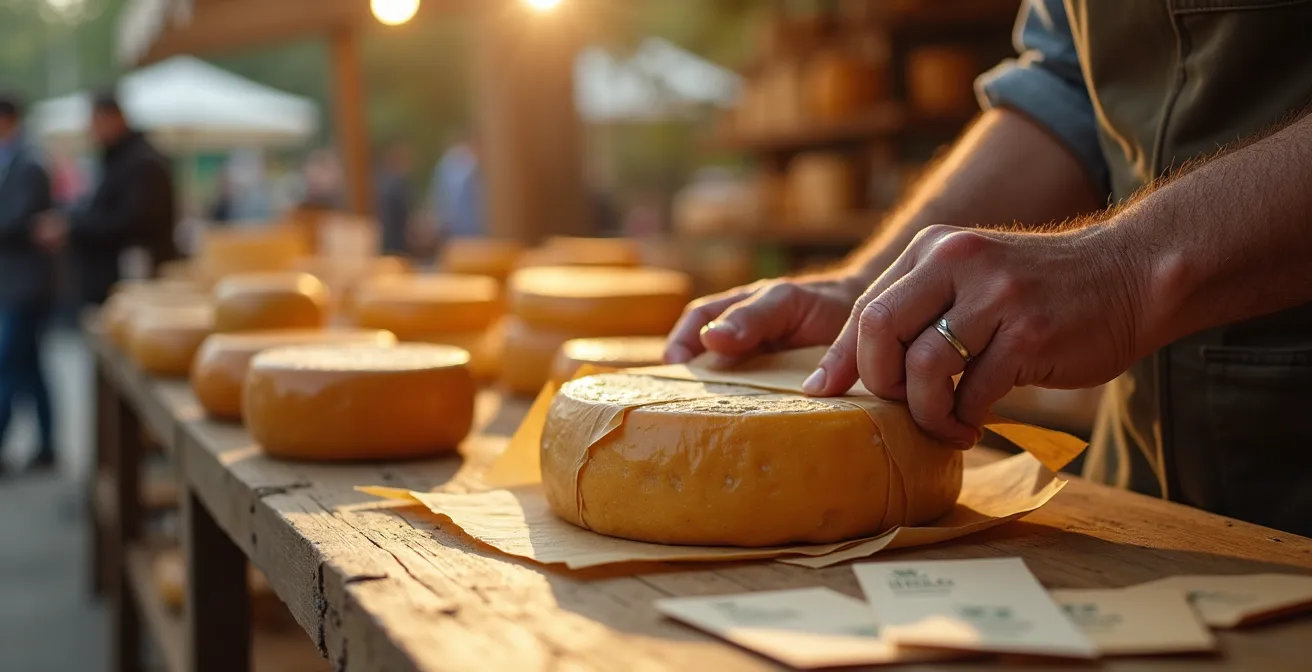
The following table outlines the general status of common farm products. Note that these are general guidelines, and final admissibility is always determined by a CBP officer at the port of entry. The presence of a country of origin label and commercial packaging significantly aids in this determination.
| Product Type | Generally Allowed | Restrictions | Documentation Needed |
|---|---|---|---|
| Hard Cheeses | Yes | No meat content | Country of origin label |
| Cured Meats | No | Banned from most countries | USDA permit if allowed |
| Olive Oils | Yes | Personal use quantities | Original packaging |
| Honey | Yes | Not for feeding bees | Commercial packaging |
| Fresh Produce | No | Generally prohibited | Phytosanitary certificate |
Saffron and Vanilla: How to Tell Real Spice from Fake?
Spices are among the most common and seemingly innocuous food souvenirs. They are lightweight, shelf-stable, and capture the essence of a destination’s cuisine. In general, most dried spices are admissible for personal use. However, the regulations are nuanced and target specific plant materials known to carry agricultural threats. The authenticity of a spice, such as real saffron versus dyed safflower, is a consumer issue; the primary concern for customs is its botanical composition and origin. Any plant material, even when dried, can potentially harbor pests or diseases.
The most significant restriction in this category pertains to citrus. Many parts of the world are affected by diseases like Citrus Greening, which could devastate the U.S. citrus industry. Consequently, any products containing citrus leaves or seeds are strictly prohibited. This is why spice blends purchased from open-air markets can be problematic; their exact ingredients are often unknown, creating a compliance risk. Commercially packaged and labeled spices provide a clear chain of custody and an ingredient list, which allows CBP officers to make an efficient and informed risk assessment.
As the USDA’s official guidance clarifies, the focus is on specific, high-risk plant materials rather than a blanket ban on all spices.
Most dried spices are allowed except for orange, lemon, lime and other citrus leaves and seeds.
This rule underscores the importance of knowing what you are carrying. Items like whole vanilla beans are treated as a spice if properly cured and dried, but fresh, uncured vanilla pods may be restricted as raw plant material. The state of processing is a key determinant of admissibility.
Cook or Eat: Is a Cooking Class Worth Your Vacation Time?
Participating in a local cooking class is an immersive way to engage with a food culture. It often culminates in a desire to bring home the unique ingredients used to replicate a dish. This scenario presents a real-time challenge in navigating customs law. The fresh herbs, specialty vegetables, or handmade pastes central to the recipe are frequently the very items that are most restricted. A cooking instructor can be a valuable resource, but their expertise is typically culinary, not legal. It is incumbent upon the traveler to ask targeted questions about the exportability of ingredients.
The prudent traveler should inquire about commercially packaged, dried, or processed alternatives to the fresh ingredients used in class. For example, a recipe’s fresh chilies may be prohibited, but a sealed packet of the same chilies, dried and commercially labeled, is likely admissible. This proactive approach shifts the focus from bringing back the exact item to bringing back the authentic *flavor* in a compliant format. The experience of one traveler illustrates how declaration and inspection can sometimes lead to surprising outcomes, even with high-risk items.
Case Study: The Admissibility of Roadside White Asparagus
A traveler returning to the United States purchased freshly picked white asparagus, a variety not readily available at home, from a roadside stand in Germany. Knowing that fresh produce is generally restricted, the traveler fully expected the item to be confiscated upon declaration at the Newark port of entry. However, after declaring the item, CBP agriculture specialists conducted a thorough inspection. Following a review that lasted approximately ten minutes, the officials determined the asparagus posed no significant biosecurity risk and allowed it through. This case highlights that while most fresh produce is denied entry, the final decision rests with the inspecting officer, and full transparency through declaration is the only licit path to a potential exception.
This anecdote is not a guarantee of future success but a powerful testament to the system’s core function: risk assessment. The officers are not there to punish, but to protect. When an item can be inspected and cleared of any potential threat, it may be allowed. However, had the traveler failed to declare the asparagus, they would have faced a certain penalty.
Truffle Season: When to Go for the Best Prices and Flavor?
For the ultimate epicurean, a trip timed with truffle season offers an unparalleled culinary experience. Fresh truffles, unearthed and sold at local markets, are a prized souvenir. Like foraged mushrooms, truffles are subject to strict inspection due to their direct contact with soil, a primary vector for pests. To be admissible, fresh truffles must be thoroughly cleaned to remove all traces of soil. Any visible dirt will result in immediate confiscation.
Beyond the condition of the truffles themselves, travelers must be aware of the distinction between personal and commercial quantities. While the average tourist is unlikely to reach this threshold, the regulations specify limits. For example, according to CBP guidelines, truffle imports exceeding 50 pounds are considered commercial and require a formal entry process, including additional safety inspections and paperwork. This rule is in place to regulate large-scale imports that could have a broader impact on the market and agricultural environment.
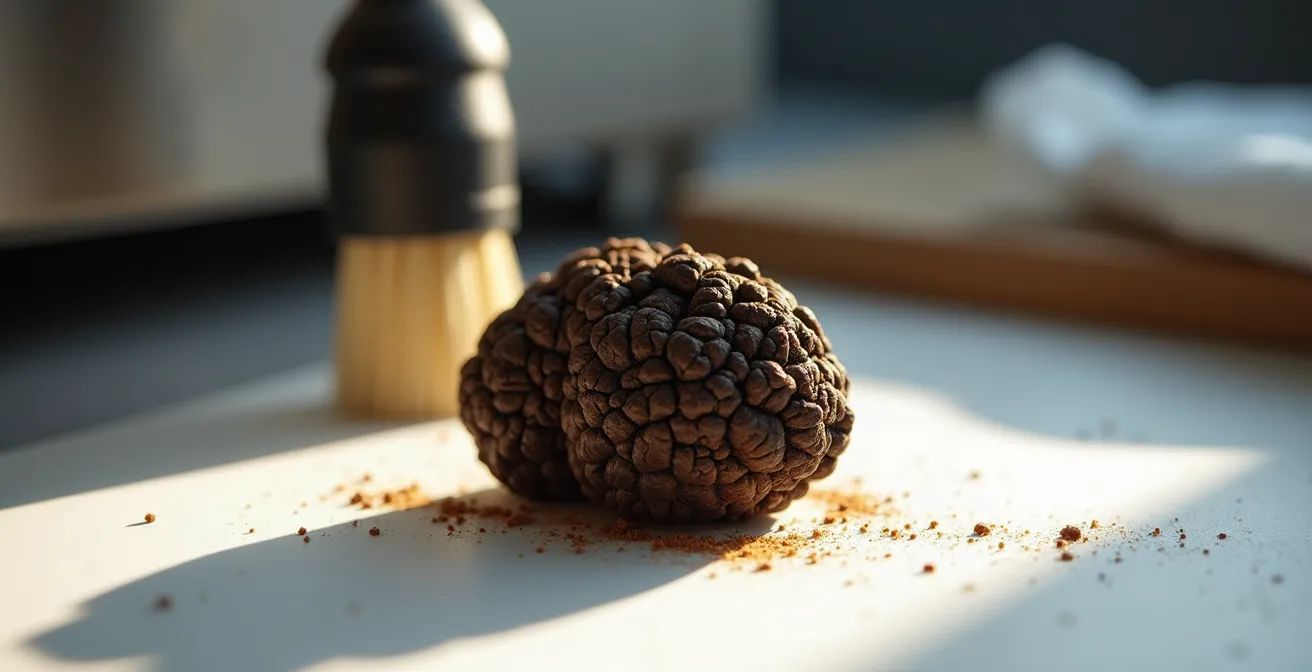
For the traveler bringing back a small quantity for personal use, the focus remains on preparation. Many reputable vendors in regions like Italy or France understand these requirements and will offer to professionally clean and vacuum-seal the truffles for travel. This service not only preserves the truffle’s aroma but also serves as a key risk mitigation step. A professionally cleaned and sealed product presents a much lower risk profile to an inspecting officer than a loose, soil-dusted truffle in a paper bag. It demonstrates a clear effort to comply with biosecurity standards, which can significantly smooth the inspection process.
Shipping Delays: What ‘Shipped from Overseas’ Really Means?
When faced with restrictive luggage space or daunting import rules, many travelers consider shipping their food souvenirs home directly from the vendor. This seems like a convenient solution, but it introduces an entirely different and more stringent set of regulations. The act of a commercial entity shipping a food product to a U.S. resident falls under the purview of the Bioterrorism Act of 2002. This legislation mandates that the sender file a “Prior Notice” with the Food and Drug Administration (FDA) before the shipment arrives at the border.
This requirement is a significant administrative burden for small, local producers. The process can be time-consuming and complex, leading many international vendors to simply refuse to ship food directly to U.S. customers. This reality is often a source of frustration for travelers who do not understand the legal distinction between carrying an item personally and having it shipped by a business.
The Gift Basket Paradox: Personal vs. Commercial Shipping
The distinction is best illustrated by what can be called the “gift basket paradox.” According to CBP, if a traveler personally purchases a gift basket in England and takes it to a local post office to mail to their own U.S. address, it is considered a personal importation and is not subject to the Bioterrorism Act’s Prior Notice requirements. However, if that same traveler asks the shop where they bought the basket to ship it for them, the transaction becomes a commercial shipment. The vendor is now the sender and is legally obligated to file Prior Notice with the FDA. This critical difference explains why many shops are unwilling to provide this service.
This legal nuance is a crucial piece of information for any food traveler. It clarifies that the challenge is often not the admissibility of the food itself, but the regulatory overhead associated with the method of transport. Personally carrying the item, declaring it, and clearing it through CBP agriculture specialists is, in many cases, a more straightforward legal path than arranging for commercial shipping.
Street Food 101: How to Eat Locally Without Getting Sick?
Street food offers a direct taste of a city’s culinary heartbeat. While enjoying it on-site is a health and safety matter, attempting to bring components of it home is a legal one. Sauces, pastes, and dishes containing meat are almost universally non-admissible due to their high biosecurity risk. Wet or fresh ingredients can harbor bacteria, while meat products from many countries are banned to prevent the spread of animal diseases. The traveler’s focus should instead be on the shelf-stable, dried components that give street food its unique flavor profile, such as spice blends or dried chilies.
However, even with these seemingly safe items, declaration is mandatory. The consequences of failing to declare a food item—any food item—can be significant. While media may highlight extreme cases, the standard penalty for a first-time offense is both financial and administrative. A traveler who fails to declare a prohibited food item will not only have the item confiscated but will also face a civil penalty. According to official reports and traveler experiences, while civil fines can reach $10,000, first-time offenders typically face a penalty of around $300.
Beyond the fine, the violation is recorded, potentially subjecting the traveler to more intensive secondary inspections on all future entries into the U.S. The risk of a monetary penalty and a permanent record of non-compliance far outweighs any potential benefit of smuggling a prohibited item. The correct legal procedure is to declare everything. If an item is prohibited, it will be confiscated without penalty. If it is admissible, it will be allowed through. The penalty is not for possessing a prohibited item, but for the failure to declare it.
Key Takeaways
- Biosecurity is the foundational legal principle; all food import rules aim to prevent the introduction of foreign pests and diseases.
- Declaration is mandatory for all food items. The penalty is for failure to declare, not for possessing a non-admissible product.
- Commercially packaged, processed, and properly labeled goods present a lower risk and have a higher likelihood of being allowed entry than fresh or unlabelled items.
Why Third-Culture Cuisine Is the Future of Gastronomy?
The strict biosecurity regulations enforced at U.S. borders have a profound and often overlooked effect: they actively shape the evolution of cuisine within diaspora communities. When immigrants and travelers are unable to import traditional, culturally significant ingredients, they are forced to adapt. This restriction becomes a catalyst for culinary innovation, giving rise to “third-culture cuisine”—a fusion that uses locally available, legally admissible ingredients to replicate or reinterpret the flavors of a distant homeland.
Case Study: How Border Biosecurity Shapes Culinary Evolution
CBP’s list of restricted agricultural items includes numerous products that are central to traditional diets around the world. For example, the restriction on many pork products impacts the creation of classic European charcuterie and Asian dishes. The prohibition of biltong (a dried, cured meat) from South Africa, certain dates from the Middle East, or liquid birds’ nests from Asia forces communities to find substitutes. This process of adaptation inadvertently drives culinary evolution, as chefs and home cooks experiment with new ingredient combinations to create dishes that are both new and nostalgic.
This demonstrates that customs regulations are more than just a bureaucratic hurdle; they are an active force in global gastronomy. The system functions on a massive scale. In a single recent year, for example, U.S. border officials conducted 630,150 positive passenger inspections, discovering prohibited agricultural items. Each of these interceptions, while protecting U.S. agriculture, also represents a moment where a traditional food pathway was interrupted, potentially sparking a new culinary solution.
Ultimately, a traveler’s interaction with customs is a small part of this much larger system. By understanding the legal framework of biosecurity, declaring all items, and being prepared for the possibility of confiscation, the foodie traveler can navigate the process with confidence and compliance, respecting the laws that inadvertently shape the future of food.
To ensure your travel plans and culinary souvenirs are fully compliant, the next logical step is to consult the official, up-to-date lists of prohibited and restricted items provided by U.S. Customs and Border Protection before your trip.
Frequently Asked Questions Regarding The Importation of Food Souvenirs
Can I bring saffron threads from Spain?
Yes, saffron threads are generally allowed as they are considered dried spices. To facilitate inspection, it is advisable to keep them in their original commercial packaging to clearly show the country of origin and product identity.
Are vanilla beans considered plants or spices?
The admissibility of vanilla beans depends on their state of processing. If they are properly cured and dried, they are treated as spices and are generally allowed. However, fresh, uncured vanilla pods may be restricted or prohibited as they are considered raw plant material.
What about spice blends with unknown ingredients?
You must declare all spice blends. Those purchased in open-air markets with unknown ingredients pose a risk, as they may contain prohibited materials like citrus leaves or seeds, which would lead to confiscation. Commercially packaged blends with a printed ingredient list are preferred as they allow for a more efficient and accurate inspection.