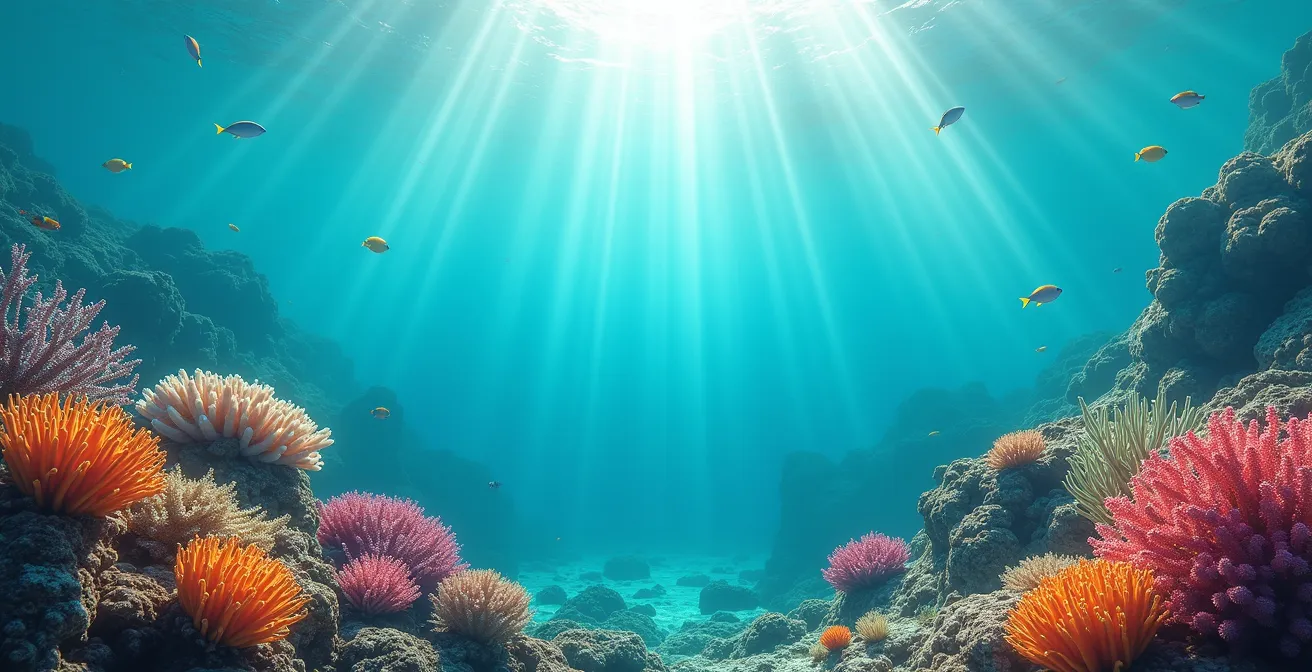
Contrary to popular belief, the danger from sunscreen isn’t just the chemical itself, but how corals transform it into a powerful, light-activated toxin.
- Common ingredients like oxybenzone are metabolized by corals, creating damaging radicals when exposed to sunlight.
- Terms like “reef-safe” are unregulated; only checking for “non-nano” mineral ingredients (Zinc Oxide, Titanium Dioxide) ensures safety.
Recommendation: Always read the “Active Ingredients” list on your sunscreen. If it contains anything other than non-nano zinc oxide or titanium dioxide, leave it on the shelf.
Imagine standing on a pristine beach, ready for a swim. You see a sign: “Only Reef-Safe Sunscreen Permitted.” You look at the bottle in your hand, a brand you’ve trusted for years, and wonder, “What’s wrong with my sunscreen?” This is a confusion many swimmers now face, as destinations from Hawaii to the Caribbean implement strict bans. You may have heard the general advice to avoid certain chemicals like oxybenzone and octinoxate, but this guidance often misses the most crucial point.
The common understanding is that these chemicals simply “harm” coral. This is a dangerous oversimplification. The real issue is far more insidious, a hidden biochemical reaction that turns a product meant for protection into an agent of destruction. It’s not just about what you put on your skin, but about what it becomes once it enters the marine ecosystem. This isn’t a matter of choosing a “greener” product; it’s about understanding a specific, scientific threat to the very foundation of ocean life.
This guide will move beyond the superficial advice. As a marine biologist, my goal is to equip you with the deeper knowledge to understand the unseen threats. We will explore the science behind the damage, decipher misleading labels, and uncover the real meaning of “reef-safe.” By understanding the true mechanism of harm, your choice of sun protection becomes a powerful act of conservation.
To navigate this crucial topic, we will use the structure below to explore the hidden dangers in our waters and how to make truly informed decisions to protect them.
Summary: Is Your Sunscreen Harming the Ocean? Why ‘Reef-Safe’ Is Non-Negotiable in 2024
- Rip Currents: The Visual Signs That Save Lives?
- Sand Fleas and Jellyfish: Preventing Bites on Tropical Beaches?
- Private vs Public Beach: Your Rights to Walk the Shoreline?
- Beach Cleanup Tourism: Does Spending 1 Hour Help?
- High Tide vs Low Tide: When Is the Best Time to Swim?
- Zero-Waste Travel: How to Refuse Plastics on an Airplane?
- Forest Bathing: The Science Behind Nature’s Cortisol Reduction?
- How to Read River Currents to Avoid Capsizing?
Rip Currents: The Visual Signs That Save Lives?
Just as a swimmer must learn to spot the subtle signs of a rip current—a channel of churning water, a break in the wave pattern—we must learn to identify the invisible threats to our oceans. The most widespread and least understood of these is chemical sunscreen. The danger isn’t as dramatic as a powerful current, but it’s far more pervasive. Scientists estimate that between 6,000 and 14,000 tons of sunscreen wash off swimmers and into coral reef areas each year. This isn’t a localized issue; it’s a constant, systemic contamination.
The “visual sign” that can save marine life isn’t on the water’s surface, but on the back of your sunscreen bottle: the ingredients list. Oxybenzone, a common UV filter, is a primary culprit. Its destructive power is hard to comprehend. The National Park Service highlights a chilling fact from studies that prompted Hawaii’s landmark sunscreen ban.
One drop of oxybenzone in 4.3 million gallons of water can be toxic to coral.
– National Park Service, Hawaii sunscreen ban studies
This extreme toxicity at minuscule concentrations means that every single swimmer’s choice matters. Recognizing harmful ingredients like oxybenzone and octinoxate is the equivalent of spotting a rip current before you enter the water. It’s the first, most critical step in avoiding a hidden, ecosystem-level disaster. The knowledge to read that label is the knowledge that saves lives—the lives of the countless organisms that form our planet’s vibrant coral reefs.
Sand Fleas and Jellyfish: Preventing Bites on Tropical Beaches?
On a tropical beach, we worry about the visible threats: the sting of a jellyfish or the irritating bite of a sand flea. We take precautions, applying balms or avoiding certain areas. Yet, the most significant “bite” occurring in these waters is entirely invisible, a biochemical attack on the coral itself. This harm originates from the very products we use for protection. A 2022 Stanford University study revealed the precise mechanism, and it’s more alarming than anyone imagined.
When coral absorbs oxybenzone, it doesn’t remain inert. The coral’s metabolism converts it into substances called phototoxic metabolites. These new molecules have a devastating property: when exposed to sunlight, they are activated and form damaging radicals that destroy the coral’s cells from within. Essentially, the sunscreen chemical is weaponized by the very sunlight it is designed to block. This is the invisible “bite” that causes coral bleaching and death. And this metabolic process doesn’t just affect corals; a CDC study found that over 90% of 2,500 people tested had oxybenzone in their urine, showing these chemicals are readily absorbed by our own bodies.

The alternative is to prevent this chemical reaction altogether by using a physical barrier. Mineral sunscreens containing non-nano zinc oxide or titanium dioxide work differently. As the texture above shows, they are composed of tiny mineral particles that sit on top of the skin, forming a physical shield that reflects UV rays. They are not absorbed by coral or skin in the same way, and therefore cannot be converted into phototoxic “stingers.” Choosing a mineral sunscreen is the most effective way to prevent the unseen bite.
Private vs Public Beach: Your Rights to Walk the Shoreline?
The debate over beach access often pits private property rights against the public’s right to enjoy the coastline. A similar, and far more critical, debate is happening on a global scale: does an individual’s “private” choice of personal care products supersede the “public” right to a healthy, functioning ecosystem? When it comes to chemical sunscreens, governments and island nations are deciding that the public good must prevail. This isn’t about limiting freedom; it’s about acknowledging a shared responsibility for a shared resource.
The turning point came in 2018, when Hawaii passed the world’s first statewide ban on sunscreens containing oxybenzone and octinoxate. This wasn’t a recommendation; it was legislation born from overwhelming scientific evidence. As noted in a report by Save The Reef, this pioneering move created a ripple effect, with island nations like Palau, Bonaire, and Aruba quickly following suit. These places, whose economies and cultures are inextricably linked to the health of their reefs, recognized the problem as an existential threat that required collective action, not just individual hope.
This legislative shift is rooted in a powerful ethical principle, one that environmental policy experts are increasingly advocating for. It’s the understanding that some choices have consequences far beyond the individual. As experts argue in the Science Policy Journal, when a product is proven to cause widespread environmental damage, the framework of personal choice no longer applies.
Case Study: Hawaii’s Pioneering Sunscreen Legislation
In 2018, Hawaii passed the first-ever statewide ban on oxybenzone and octinoxate sunscreens, which went into effect in 2021. The legislation was a direct response to scientific studies showing the chemicals’ devastating impact on coral DNA, reproduction, and growth. This act of environmental stewardship has since inspired other tourism-dependent regions, including the U.S. Virgin Islands, Key West, and Palau, to enact similar laws, establishing a new global standard for the protection of marine ecosystems.
The shoreline belongs to everyone, and so does the ocean. Protecting it is not just a right, but a fundamental duty. The legal bans on harmful sunscreens affirm that the health of our shared blue spaces is non-negotiable.
Beach Cleanup Tourism: Does Spending 1 Hour Help?
Beach cleanups are a powerful, visible symbol of environmental stewardship. Volunteers spend hours removing tangible waste: plastic bottles, bags, and fishing nets. This work is vital and commendable, but it distracts us from a more pervasive and insidious form of pollution. While we are picking up a plastic straw, our oceans are being saturated with a chemical soup from sunscreens. Does an hour of cleanup help? Yes, but it does not address the invisible crisis unfolding beneath the waves.
s
The pollution from sunscreen is not a hypothetical threat; it is a measurable reality. Studies in popular tourist areas have quantified the contamination. For example, analysis of coastal waters in Hawaii revealed that coral reef contamination levels range from 0.8 to 19.2 µg/L for oxybenzone. These are not trace amounts; they are concentrations proven in labs to cause significant harm to coral and other marine life. Unlike a plastic bottle, which can be physically removed, these chemicals dissolve and spread, becoming part of the water column and marine food web.
This forces us to re-evaluate what it means to “clean” a beach. Preventing a liter of chemical-laden sunscreen from entering the water is arguably more impactful than removing a bag of visible trash. This is not to diminish the importance of cleanups, but to put the scale of the problem in perspective. The most effective “cleanup” is one of prevention. It is the conscious choice, made millions of times a day by beachgoers, to refuse to purchase or use sunscreens with harmful chemicals. This single act prevents pollution at its source, an intervention far more efficient than any subsequent cleanup effort could ever be.
The next time you consider your environmental impact at the beach, think beyond the visible trash. The most significant contribution you can make is ensuring that what you put on your skin doesn’t become tomorrow’s invisible, toxic waste.
High Tide vs Low Tide: When Is the Best Time to Swim?
Swimmers often plan their beach trips around the tides, seeking the calm waters of high tide or the expansive sandbars of low tide. But when it comes to ocean health, we are facing a different kind of tide: a tide of scientific evidence. For years, the link between sunscreen and coral damage was debated. Today, as Dr. Craig Downs of the Haereticus Environmental Laboratory states, ” the tide of scientific evidence is now too high to ignore.” The question is no longer *if* sunscreens cause harm, but how we respond to this overwhelming knowledge.
Part of that response is rethinking our relationship with the sun itself. Instead of relying solely on a chemical layer, we can adopt smarter behaviors. This includes choosing the best time to swim. Swimming during the early morning or late afternoon—the “golden hours”—not only exposes you to less intense UV radiation but also enhances the beach experience. It reduces the need for heavy sunscreen application, thereby decreasing the chemical load on the local marine environment.

Another powerful strategy is to adopt physical barriers. As seen above, wearing UPF (Ultraviolet Protection Factor) clothing like rash guards and sun hats provides excellent, reliable sun protection without introducing any chemicals into the water. A long-sleeved UPF shirt can be more effective than a layer of sunscreen, and its protection doesn’t wash off or degrade. Combining this approach with a truly reef-safe mineral sunscreen for exposed skin is the gold standard for responsible beachgoing.
Your Action Plan for Ocean-Safe Sun Protection
- Check the Active Ingredients: Ignore front-of-bottle claims. Flip it over. Look for “Non-Nano Zinc Oxide” or “Non-Nano Titanium Dioxide” as the only active ingredients.
- Avoid the “Fatal Four”: If you see Oxybenzone, Octinoxate, Octocrylene, or 4-MBC, do not buy or use the product.
- Embrace Physical Barriers: Invest in a UPF 50+ rash guard, a wide-brimmed hat, and sunglasses. They are the most reliable form of sun protection.
- Time Your Swim: Whenever possible, enjoy the water during the early morning or late afternoon to reduce peak UV exposure and sunscreen dependency.
- Apply and Wait: Apply mineral sunscreen at least 15-20 minutes before entering the water. This allows it to form an effective film on your skin and minimizes how much washes off immediately.
Zero-Waste Travel: How to Refuse Plastics on an Airplane?
The conscious travel movement has taught us to refuse single-use plastics, from straws on an airplane to disposable water bottles. This “refusal” mindset is a pillar of zero-waste living. We must now extend this principle beyond plastics to include harmful chemicals. Refusing to purchase and use sunscreens with reef-damaging ingredients is a crucial act of zero-waste travel, preventing chemical waste at its source. Understanding what to refuse is the first step.
The distinction between “safe” and “harmful” sunscreen ingredients is clear and based on their fundamental mechanism. Safe ingredients are minerals that create a physical barrier. Harmful ingredients are synthetic chemicals that absorb UV light but trigger devastating biological processes in coral. This is not a gray area; it is a black-and-white choice between a physical shield and a chemical reactor. The table below, based on analyses from conservation groups, breaks down the key players.
| Safe Ingredients | Harmful Ingredients | Impact on Coral |
|---|---|---|
| Non-nano Zinc Oxide | Oxybenzone | Causes DNA damage and bleaching |
| Non-nano Titanium Dioxide | Octinoxate | Disrupts reproduction cycles |
| Mineral-based filters | Octocrylene | Acts as endocrine disruptor |
| Physical barriers | 4-MBC | Induces coral bleaching |
Just as you would check a food label for allergens, you must check your sunscreen’s “Active Ingredients” list for these harmful chemicals. The presence of even one of the ingredients in the “Harmful” column disqualifies a product as truly reef-safe, no matter what the marketing on the front of the bottle claims. By refusing to let these chemicals into your travel bag, you are practicing a deeper form of zero-waste travel—one that protects our planet’s most fragile and vital underwater ecosystems.
Forest Bathing: The Science Behind Nature’s Cortisol Reduction?
“Forest bathing,” or Shinrin-yoku, is the practice of immersing oneself in nature to reap its scientifically-proven wellness benefits, such as reduced cortisol levels. It is a reminder of the immense, often uncalculated, value that healthy ecosystems provide to human well-being. We readily accept the value of a forest, but we tragically overlook the equivalent value of a healthy coral reef. A thriving reef is not just a pretty underwater garden; it is a cornerstone of global economic and environmental health.
The economic contribution of coral reefs is staggering. A comprehensive analysis highlighted by Sustainable Travel International estimates that coral ecosystems have a global economic value of up to $9.9 trillion annually. This value comes from tourism, fishing industries, and, most critically, coastal protection. Reefs act as natural breakwaters, dissipating wave energy and protecting coastal communities from storm surges—a service that would cost billions to replicate with man-made structures. Destroying this natural infrastructure for the convenience of a specific type of sunscreen is an act of profound economic and ecological ignorance.
The destruction is a subtle, collaborative process between chemicals and a coral’s own biology. As Stanford University researchers discovered, the symbiotic algae living within corals can actually sequester some of the phototoxic metabolites that corals produce from oxybenzone, offering a degree of protection. However, when ocean temperatures rise and corals expel these algae during a bleaching event, they lose this protective mechanism. This makes them far more vulnerable to the damaging effects of sunscreen chemicals, creating a fatal one-two punch of heat stress and chemical toxicity. Protecting reefs means protecting this delicate symbiosis.
Just as we protect forests for our mental and physical health, we must protect reefs for our collective survival and prosperity. The choice to use a reef-safe sunscreen is a small investment in preserving trillions of dollars of natural capital and the immeasurable wellness it provides.
Key Takeaways
- The primary danger of chemical sunscreens is phototoxicity: corals metabolize ingredients like oxybenzone into new, toxic compounds activated by sunlight.
- “Reef-safe” and “reef-friendly” are unregulated marketing terms. The only way to be sure is to check for “non-nano” zinc oxide or titanium dioxide as the sole active ingredients.
- Protecting reefs is a collective responsibility, leading to legislative bans that prioritize ecosystem health over individual product choice.
How to Read River Currents to Avoid Capsizing?
A kayaker learns to read the subtle lines on a river’s surface to understand the powerful, unseen currents below. A ripple here, an eddy there—each is a sign that dictates a safe path. Navigating the world of sunscreens requires a similar skill. You must learn to “read the currents” on an ingredients label to avoid capsizing the fragile ecosystems you’ve come to enjoy. The language may seem technical, but the signs are clear once you know what to look for.
The primary “current” to read is the distinction between chemical and mineral filters. Chemical filters like oxybenzone are the treacherous rapids. As marine conservation experts put it, they create a dangerous, unpredictable environment for marine life. Mineral filters, specifically non-nano zinc oxide and titanium dioxide, are the calm waters—a safe, predictable path. They provide protection without initiating a chain of toxic chemical reactions.
If you see Oxybenzone, think Class V Rapids – Avoid. If you see Non-Nano Zinc Oxide, think calm waters – Safe to proceed.
– Marine conservation experts, Reef Safe Sunscreen Guide
Mastering this skill is not about memorizing dozens of chemical names. It’s about a simple, binary choice. Does the “Active Ingredients” list contain anything other than zinc oxide or titanium dioxide? If the answer is yes, you are looking at a Class V rapid. Put it down. If the answer is no, you have found calm waters. This simple reading method empowers you to make a safe choice every single time, protecting both yourself and the vibrant underwater world.
Your journey to becoming a guardian of our oceans begins not with a grand gesture, but with a simple, conscious decision in a store aisle. The next step is to take this knowledge and apply it. Commit to reading every label and choosing products that protect our reefs, ensuring that future generations can marvel at the beauty you are helping to preserve today.
Frequently Asked Questions About Why Reef-Safe Sunscreen Is Non-Negotiable in 2024?
What makes a sunscreen truly reef-safe?
A reef-friendly sunscreen will only contain the minerals zinc oxide and/or titanium dioxide as active ingredients. If there’s a chemical listed, then it’s not reef friendly — no matter what the label claims.
Why can’t I trust ‘reef-safe’ labels?
The terms ‘reef friendly’ and ‘reef safe’ are not regulated, so you can’t just trust products with this description. Any brand can use those terms on the bottle, even if the ingredients tell a different story. The best and only way to know for sure is to read the label carefully.
How much oxybenzone is absorbed by my body?
It’s estimated that four percent of the oxybenzone in our sunscreen is absorbed by our bodies — during each sunscreen application.