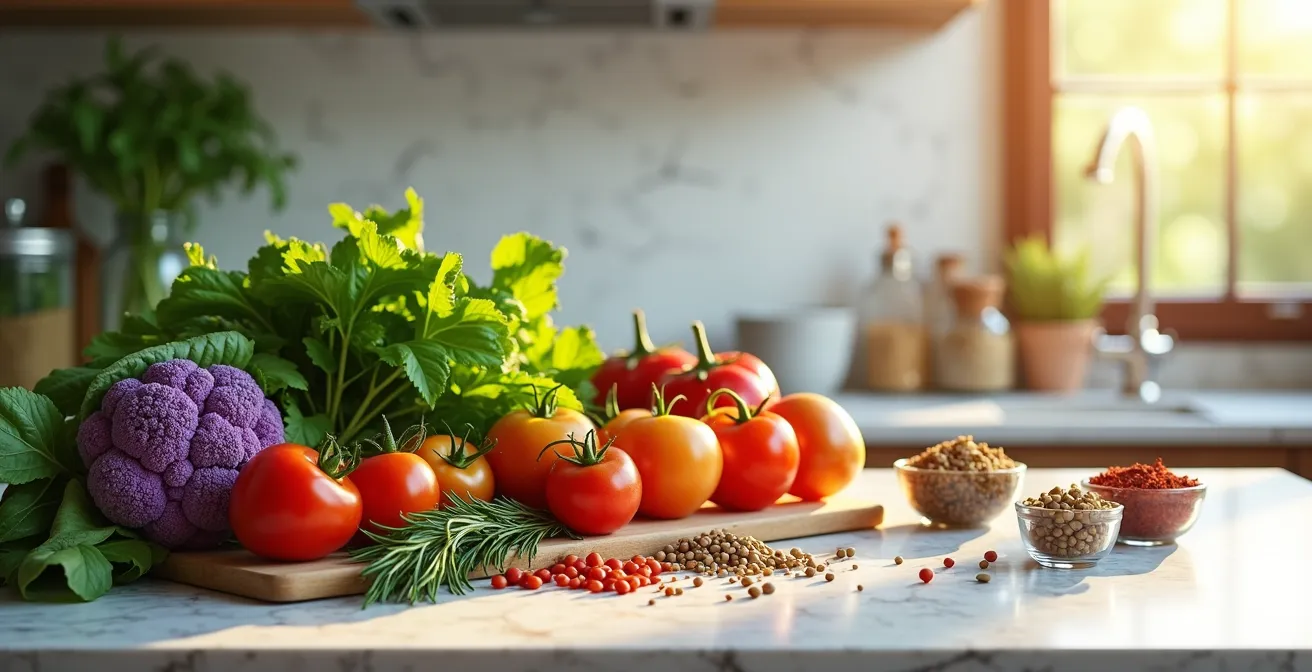
Contrary to popular belief, transitioning to a plant-centric diet isn’t about restriction; it’s about upgrading your culinary skills by mastering the science of flavor.
- Flavor is intrinsically linked to nutrient density and gut health, making the most delicious choice often the healthiest.
- Strategic food preparation and meal sequencing can dramatically boost both taste and metabolic health, preventing energy crashes.
Recommendation: Start thinking like a taster, not a dieter. Apply the 5-step tasting method to your next meal to truly understand its components and unlock a new level of appreciation.
For many food lovers, the phrase “plant-based diet” conjures images of deprivation: bland salads, boring steamed vegetables, and a sad farewell to the rich, complex flavors that make eating a joy. If you’ve been advised to lower your cholesterol but the thought of “diet food” makes you shudder, you’re not alone. The common approach of simply removing meat and replacing it with a pale imitation often leads to culinary disappointment. This is where we get it wrong. A successful transition to a primarily plant-based lifestyle isn’t about what you eliminate; it’s about what you learn.
The secret lies in shifting your perspective from one of subtraction to one of culinary mastery. It’s about understanding the fundamental principles of flavor architecture. Great cooking, regardless of the ingredients, is a science. It relies on the interplay of salt, fat, acid, and heat. When you learn to wield these elements like a chef, you can create plant-based dishes that are not just “good for a vegan meal” but are genuinely, breathtakingly delicious in their own right. You stop chasing the ghost of a steak and start celebrating the robust, earthy flavor of a perfectly roasted mushroom or the zesty brightness of a preserved lemon.
This guide is your new playbook. We won’t be listing sad substitutes or joyless recipes. Instead, we’ll dive into the chef-level strategies that unlock incredible flavor from the plant kingdom. We will explore how your gut health is tied to flavor perception, how to meal prep gourmet dishes efficiently, and why the timing of your ingredients matters as much as the ingredients themselves. Get ready to transform your kitchen into a flavor laboratory and rediscover the profound pleasure of eating well.
To guide you on this culinary journey, we’ve structured this article to build your skills from the ground up, from understanding the foundation of health and flavor to mastering advanced culinary techniques.
Summary: A Chef’s Guide to Flavorful Plant-Based Vitality
- Why Your Gut Health Affects Your Mental State?
- How to Meal Prep Gourmet Dishes in Under 2 Hours?
- Organic or Local: Which Matters More for Nutrient Density?
- The Glucose Spike Error That Causes Afternoon Crashes
- Seasonal Eating: Adapting Your Menu to Nature’s Rhythm
- Holiday Tables: Why We Eat Specific Foods on Specific Dates?
- Salt and Acid: Why This Combo Makes Everything Taste Better?
- How to Taste Wine Like a Sommelier in 5 Steps?
Why Your Gut Health Affects Your Mental State?
The journey to flavor begins in a surprising place: your gut. The connection between what you eat, your digestive health, and your mental well-being—often called the gut-brain axis—is a foundational concept in modern nutrition. Far from being just a digestive tube, your gut is a complex ecosystem teeming with trillions of bacteria that communicate directly with your brain. When you feed these beneficial microbes the right foods, they produce compounds that can positively influence your mood, reduce stress, and even sharpen your cognitive function.
Plant foods are the primary fuel for a healthy gut microbiome. They are rich in fiber and polyphenols, which are powerful antioxidants that give fruits and vegetables their vibrant colors. In fact, research reveals that over 6000 dietary flavonoids act as key modulators of the gut-brain axis. These compounds aren’t just good for you; they are essential food for your beneficial gut bacteria. In return, these bacteria produce “postbiotics” like short-chain fatty acids, which help maintain the gut lining, reduce inflammation, and send positive signals to your brain via the vagus nerve.
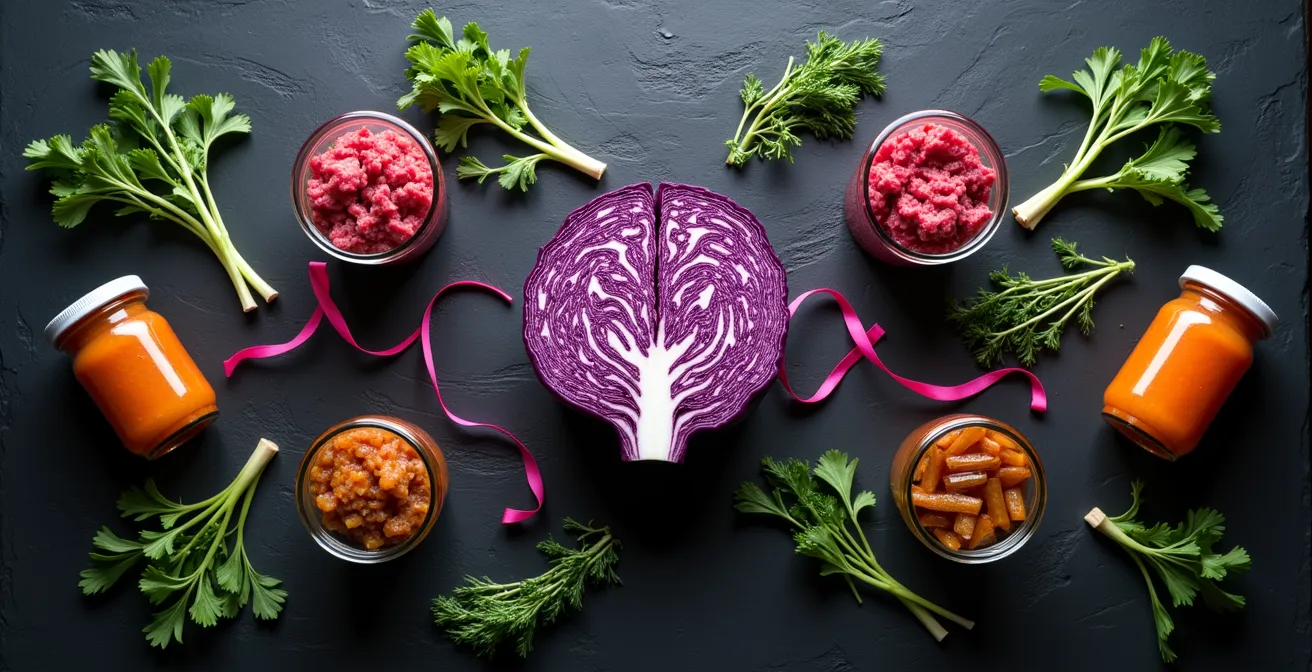
Thinking of food this way transforms your choices. That colorful beet and cabbage salad isn’t just a low-cholesterol option; it’s a direct investment in your mental clarity and emotional resilience. By prioritizing a diverse range of colorful plants, you are not just nourishing your body; you are cultivating an internal garden that supports a happier, healthier mind. This makes the pursuit of flavor and the pursuit of well-being one and the same mission.
How to Meal Prep Gourmet Dishes in Under 2 Hours?
For a foodie, traditional “meal prep”—endless rows of identical plastic containers—can feel like a culinary prison. The key to maintaining flavor and excitement is to abandon the idea of prepping full meals and instead adopt a component-based prep strategy. This chef-approved method focuses on preparing versatile building blocks that can be mixed and matched throughout the week to create a variety of gourmet-quality dishes in minutes. Instead of eating the same chicken, broccoli, and rice five times, you create an arsenal of flavors and textures to play with.
This approach breaks down your two-hour prep session into focused, high-impact tasks. You might spend 20 minutes whipping up a vibrant beet hummus and a creamy cashew queso. Another 45 minutes could be dedicated to roasting a tray of seasoned root vegetables and cooking a batch of perfectly fluffy quinoa. The final part of your session involves creating “flavor bombs”—concentrated elements like a savory mushroom-miso paste or an herbaceous compound butter—that can instantly elevate any dish from simple to spectacular. This method respects your time while maximizing your culinary creativity.
Your Weekly Gourmet Prep Blueprint: Component Strategy
- Sauce Arsenal: Spend 20 minutes making 2-3 versatile, flavor-packed sauces like beet hummus, cashew queso, or a lemon-tahini dressing.
- Base Components: Cook foundational elements separately. Think perfectly seasoned lentils, fluffy quinoa, and trays of roasted sweet potatoes or broccoli.
- Flavor Bombs: Create a stash of high-impact flavor enhancers. This could be a jar of chili crisp, an umami-rich mushroom-miso paste, or herb-infused compound butters.
- Passive Cooking: Maximize downtime by using overnight marinades for tofu or tempeh and leveraging a slow cooker for complex, hands-off broths.
- Visual Assembly: Store all components in clear, separate containers. This allows you to “shop your fridge” and assemble beautiful, delicious bowls and plates in minutes.
To make this strategy even more effective, consider the relationship between your time investment and the flavor payoff. Some preparations deliver more bang for your buck than others.
| Prep Method | Time Investment | Flavor Impact | Shelf Life |
|---|---|---|---|
| Sauce Preparation | 20 minutes | High – transforms simple ingredients | 5-7 days |
| Component Cooking | 45 minutes | Medium – provides variety | 4-5 days |
| Overnight Marinades | 5 min active | Very High – deep flavor penetration | 3-4 days |
| Spice Blooming | 10 minutes | High – intensifies aromatics | 2 weeks |
Organic or Local: Which Matters More for Nutrient Density?
In the quest for the healthiest, most flavorful produce, we’re often faced with a choice in the supermarket aisle: a plastic-wrapped organic pepper from a thousand miles away, or a non-organic one from a farm just down the road? While the “organic” label provides assurances about the absence of synthetic pesticides, foodies and nutritionists are increasingly focusing on a different variable: time. The moment a fruit or vegetable is harvested, its nutritional clock starts ticking. Vitamins, antioxidants, and—crucially for a foodie—delicate flavor compounds begin to degrade.
The most flavorful produce is often the most nutrient-dense, regardless of label. Time is the critical variable – key nutrients and flavor compounds degrade rapidly after harvest.
– Michele Redmond, MSGdish – Umami Flavor Profiles for Vegetables
This principle suggests that freshness often trumps certification. A locally grown tomato, picked at peak ripeness and eaten within a day or two, will likely offer more flavor and a higher concentration of certain nutrients than an organic one that has spent a week in transit and cold storage. This is the concept of terroir applied to vegetables—the idea that the environment and the freshness contribute immeasurably to the final taste. Look for produce with signs of life: vibrant colors, firm textures, and fresh, fragrant stems. These are the true indicators of quality.
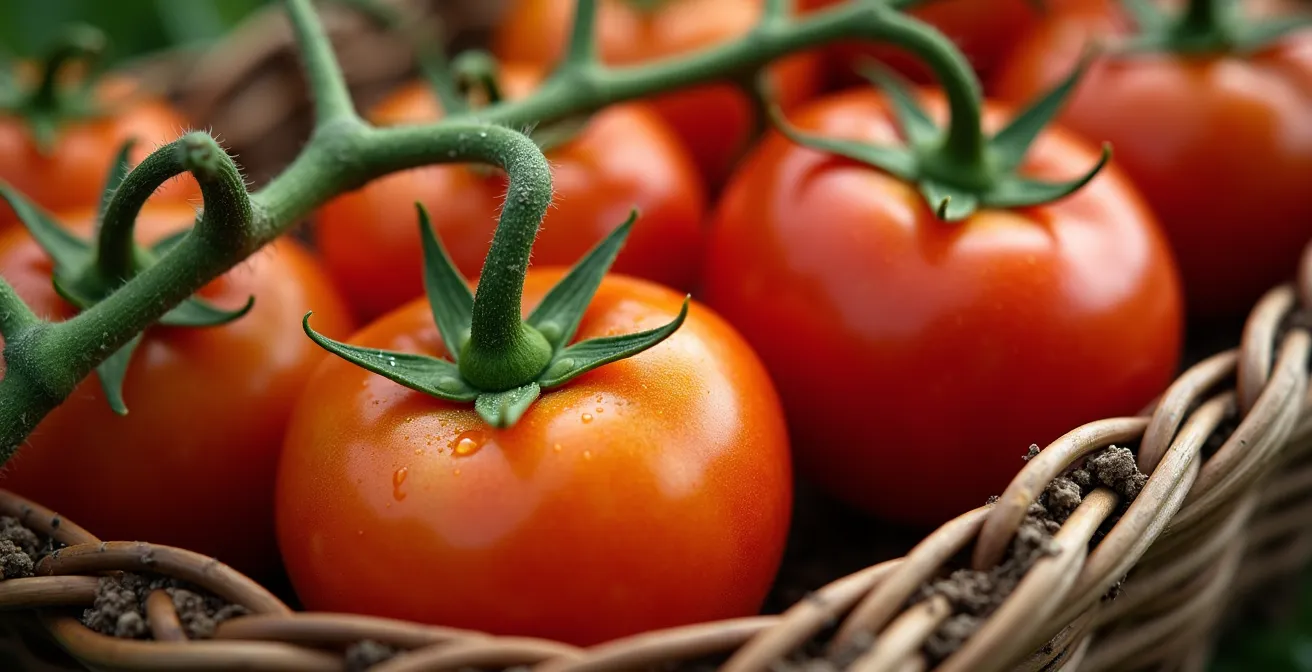
This doesn’t mean you should ignore organic labels entirely, especially for produce on the “Dirty Dozen” list. However, the ultimate goal is to prioritize the freshest, most vibrant ingredients available. Developing a relationship with your local farmers’ market is one of the best investments you can make in both your health and your culinary pleasure. You gain access to produce at its absolute peak, and in doing so, you naturally maximize both nutrient density and flavor.
The Glucose Spike Error That Causes Afternoon Crashes
We’ve all been there: a satisfying lunch followed by an overwhelming wave of fatigue an hour or two later. This “afternoon crash” is often the result of a rapid spike and subsequent fall in blood sugar, a process heavily influenced by *how* we eat, not just *what* we eat. For those managing cholesterol and overall health, stabilizing blood sugar is key. The exciting news is that you can do this not through restriction, but through a delicious, flavor-focused strategy: strategic flavor sequencing. The order in which you eat the components of your meal can dramatically change its metabolic impact.
The principle is simple: start your meal with fiber, fat, and protein before introducing carbohydrates. Begin with a small salad dressed in a vinaigrette; the fiber creates a “mesh” in your stomach, and the vinegar has been shown to blunt glucose response. Next, move to your protein and healthy fat source—perhaps some savory pan-fried tofu or a creamy avocado. By front-loading these elements, you slow down digestion and prepare your body to handle the carbohydrates that come last, such as sweet potatoes or quinoa. This simple reordering prevents the sharp glucose spike that leads to energy crashes and cravings.
This is not about eliminating carbs but about eating them intelligently. Furthermore, incorporating sufficient protein is crucial. In fact, nutrition research shows that meals with over 30 grams of plant protein per serving can significantly stabilize blood sugar levels. Building your plate with this sequence in mind—greens, then protein/fat, then carbs—is a powerful tool for maintaining steady energy all day long, turning your meal into a source of lasting vitality, not a prelude to a nap.
Seasonal Eating: Adapting Your Menu to Nature’s Rhythm
The most talented chefs know a secret that has been practiced for millennia: the best-tasting food is seasonal food. Eating in harmony with nature’s rhythm is not just a romantic notion; it’s a practical strategy for maximizing flavor, nutrition, and affordability. When you buy strawberries in winter, you’re buying a ghost of a strawberry—pale, firm, and tart, a shadow of the juicy, ruby-red gems available in June. Seasonal eating is the art of aligning your menu with what the earth is offering at its peak.
Each season provides a unique flavor palette designed to support our bodies. Spring offers tender greens, asparagus, and peas, perfect for light, cleansing meals after a long winter. Summer bursts forth with an abundance of sweet, hydrating fruits and vegetables like tomatoes, cucumbers, and berries. Autumn brings grounding, earthy flavors from root vegetables, squash, and mushrooms, providing heartier fare as the weather cools. Winter provides nutrient-dense storage crops and bright citrus to help bolster our immunity. By tuning into this cycle, your cooking becomes more intuitive and creative.
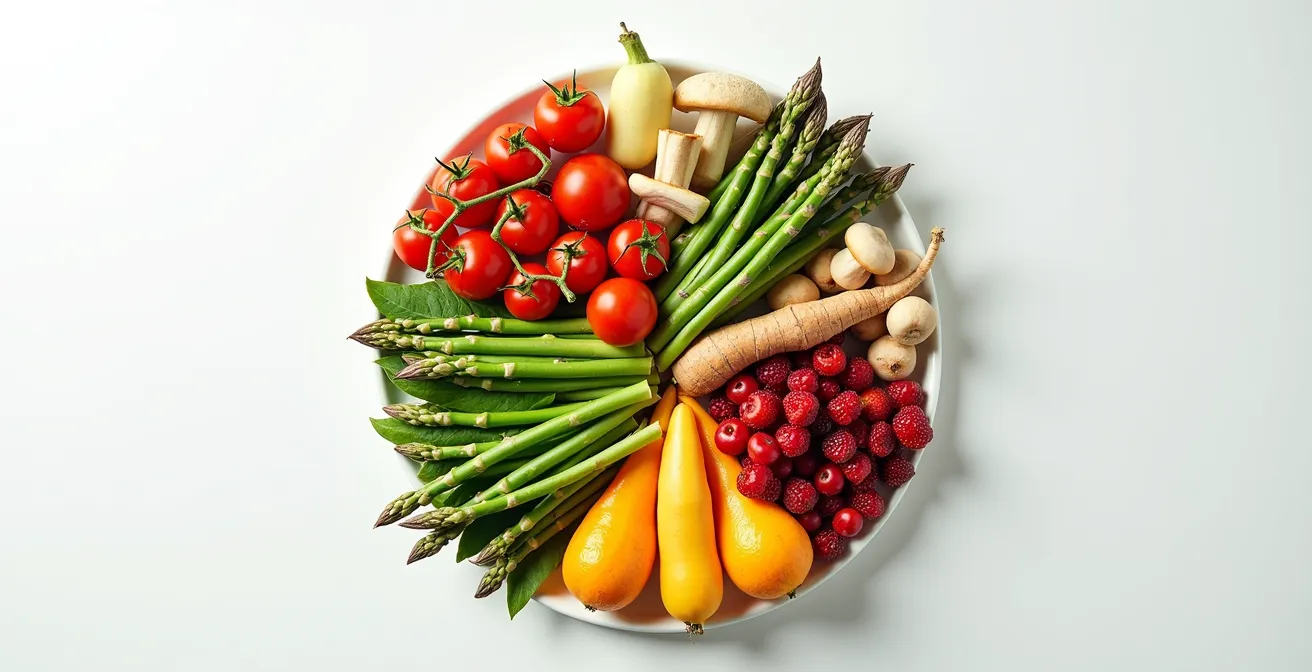
Adapting your menu to nature’s rhythm forces you to explore new ingredients and techniques. You’ll find yourself eagerly awaiting the first asparagus of spring or the arrival of heirloom tomatoes in late summer. This practice reconnects you to your food source and the passage of time. It encourages a move toward what the food industry is now embracing: single-origin ingredients that highlight the purity of their location and season. A simple dish of roasted autumn squash with sage doesn’t need much help to be spectacular, because nature has already done most of the work.
Holiday Tables: Why We Eat Specific Foods on Specific Dates?
Holiday meals are steeped in tradition and emotion. The flavors of a Thanksgiving table or a Christmas dinner are deeply tied to memory, culture, and a sense of belonging. For someone transitioning to a plant-based diet, this can be the most challenging territory to navigate. The goal is not to create a pale imitation of the original, but to craft new traditions that are just as celebratory and delicious, using the full power of plant-based flavor architecture. It’s about creating a sensory narrative that feels both comforting and excitingly new.
Unconventional flavor pairings offer a way for consumers to explore new culinary experiences without sacrificing comfort or familiarity.
– ADM Flavor Trends Team, ADM 2025 Flavor and Color Trends Report
The first step is to deconstruct the “flavor signature” of a traditional dish. What makes Thanksgiving stuffing taste like Thanksgiving? It’s often a specific blend of sage, thyme, and rosemary. This same aromatic combination can be applied to a stunning centerpiece like a whole roasted cauliflower or a hearty mushroom and lentil loaf, evoking the same emotional response through scent and taste. The key is to deliver on the familiar sensory cues—rich textures, savory aromas, and beautiful colors—while showcasing the incredible potential of plant ingredients.
This is your opportunity to create a new “showstopper” dish that becomes a future classic. Imagine a magnificent Mushroom Wellington with a flaky crust and a rich red wine reduction, or a vibrant, multi-layered sweet potato gratin. By focusing on creating dishes that are inherently spectacular, rather than trying to mimic meat, you invite everyone at the table to celebrate a new, equally delicious tradition. You’re not the person who “can’t” eat the turkey; you’re the person who brought the most exciting dish to the party.
Key Takeaways
- Flavor is not a luxury, but a sign of nutrient density and a key to supporting your gut-brain axis for better mental well-being.
- Adopt a “component-based” prep system, focusing on versatile sauces, bases, and flavor bombs to create gourmet meals quickly.
- Prioritize freshness and seasonality over labels; the time from harvest to plate is the most critical factor for both taste and nutrition.
Salt and Acid: Why This Combo Makes Everything Taste Better?
If there is one secret that separates professional chefs from home cooks, it is the masterful understanding of balance, particularly the dynamic interplay between salt and acid. These two elements are the fundamental pillars of flavor architecture. Used correctly, they don’t just add their own taste; they create a kind of gustatory synergy, amplifying and brightening every other flavor in the dish. Salt’s primary role is to suppress bitterness and enhance our perception of aroma and sweetness, making flavors “pop.” Acid, in the form of citrus, vinegar, or fermented foods, cuts through richness, adds brightness, and prevents a dish from feeling heavy or one-note.
A dish without enough acid can taste flat or muddy, while a dish without enough salt will taste bland and incomplete. The magic happens when they are used in harmony. Think about a simple bowl of lentil soup. It might taste earthy and pleasant on its own. Add a generous pinch of salt, and the flavors become more defined. But add a final squeeze of fresh lemon juice, and the entire dish transforms. It becomes vibrant, complex, and infinitely more delicious. This finishing touch of acid is often the missing ingredient in plant-based cooking.
This principle extends to the fifth taste, umami, which provides a savory, brothy, and deeply satisfying flavor. Umami-rich ingredients like miso paste, mushrooms, and nutritional yeast are crucial in plant-based cooking for building depth. Interestingly, many powerful flavor-building ingredients are “compound seasonings” that inherently combine these elements.
| Compound Seasoning | Salt Component | Acid Component | Additional Flavor |
|---|---|---|---|
| Preserved Lemons | Salt-cured | Citric acid | Bitter, floral |
| Capers | Brined | Vinegar | Floral, pungent |
| Miso Paste | Fermented salt | Lactic acid | Umami, sweet |
| Pickled Ginger | Salt | Rice vinegar | Spicy, sweet |
How to Taste Wine Like a Sommelier in 5 Steps?
The ultimate step in becoming a master of your plant-based kitchen is to learn how to taste like a professional. A sommelier doesn’t just drink wine; they analyze it, deconstruct it, and develop a vocabulary to describe its nuances. You can apply this exact same methodology to your food. By transforming the act of eating into a conscious act of tasting, you deepen your appreciation and train your palate to recognize what makes a dish work. This practice empowers you to become a better, more intuitive cook.
Developing a vocabulary for plant flavors deepens appreciation and improves the ability to create and balance flavors – terms like ‘petrichor’ for beets, ‘nutty’ for sunchokes, ‘peppery’ for arugula.
– Nisha Vora, Rainbow Plant Life – Big Vegan Flavor Cookbook
The classic 5-step tasting method used for wine can be perfectly adapted to a plate of food. It encourages you to engage all your senses and build a mental library of flavors, textures, and aromas. This isn’t about being pretentious; it’s about being present. It’s about noticing the peppery bite of fresh arugula, the earthy sweetness of a roasted beet, or the creamy texture of a cashew sauce. When you can identify these individual components, you can begin to understand how they work together in harmony.
Follow these steps with your next meal to begin your training:
- SEE: First, eat with your eyes. Observe the colors, the textures, and the overall presentation. Note the vibrancy of the greens or the deep char on roasted vegetables. Is it visually appealing?
- SWIRL: On your plate, gently mix different components together. Drag a piece of roasted carrot through a sauce. This helps release aromatic compounds, just like swirling wine in a glass.
- SMELL: Before taking a bite, bring the fork close to your nose. What do you smell? Identify the individual aromatics—is it herbaceous from parsley, earthy from mushrooms, pungent from garlic?
- SIP/TASTE: Take a small, thoughtful bite. Let it sit on your palate. Notice the initial impact—is it sweet, salty, acidic? Pay attention to the texture—is it creamy, crunchy, tender?
- SAVOR: Notice the “finish” or aftertaste. How do the flavors evolve and linger? Can you identify the five basic tastes: sweet, sour, salty, bitter, and umami?
Embracing a primarily plant-based way of eating is a journey of discovery, not deprivation. By mastering these core principles of flavor, you empower yourself to create food that is not only vital for your health but also a profound source of joy and satisfaction. To begin putting these concepts into practice, start by consciously identifying the elements of salt, fat, and acid in your very next meal.