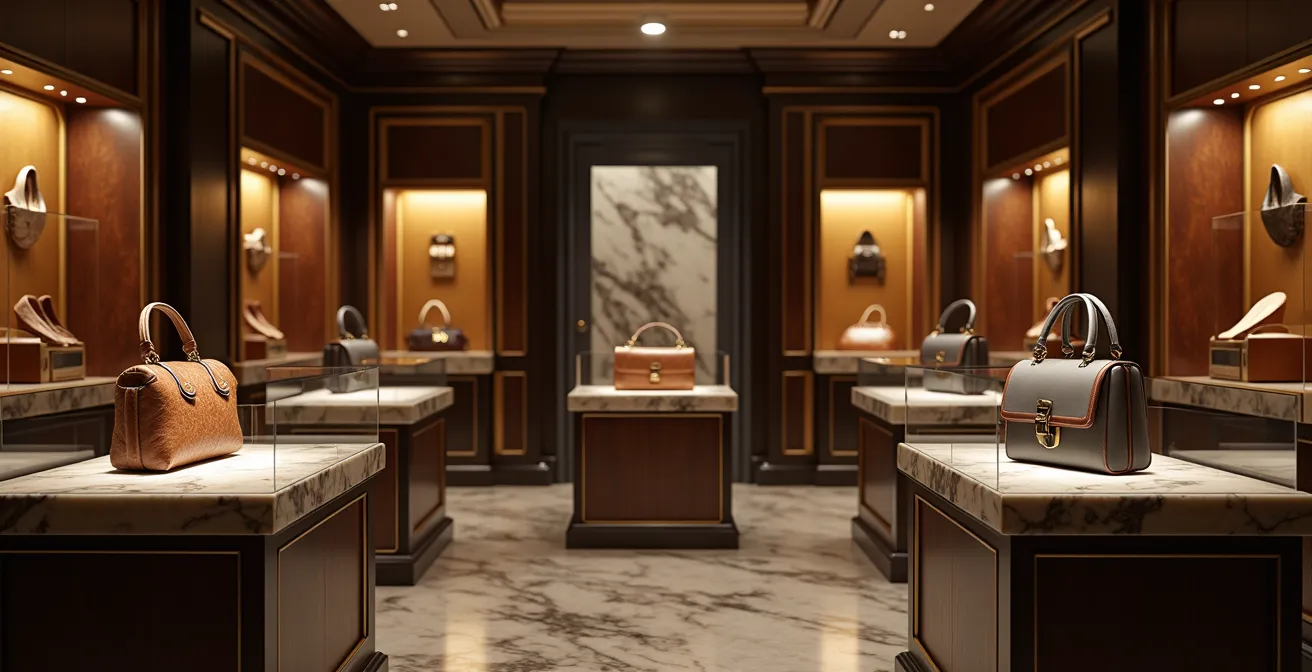
Pre-owned luxury is not just sustainable shopping; it’s a tangible asset class that can outperform traditional financial investments.
- Select luxury goods, particularly certain handbags and watches, have demonstrated double-digit annual returns, rivaling the S&P 500.
- Asset value is driven by a combination of brand equity, controlled scarcity, cultural significance, and documented provenance.
Recommendation: Approach luxury acquisitions as portfolio decisions. Prioritize items with proven value retention and develop a clear strategy for authentication, maintenance, and eventual liquidation.
For the savvy consumer, the allure of luxury goods has always extended beyond simple aesthetics. It’s a statement of taste, an appreciation for craftsmanship, and an investment in quality. However, the conversation is shifting. The conventional wisdom focuses on the initial retail purchase, often overlooking the sophisticated financial ecosystem that exists just beyond the boutique’s doors: the second-hand market. Many view this market through the simple lens of finding a bargain or promoting sustainability, valid points that barely scratch the surface of a far more compelling reality.
But what if the true “hidden value” of the pre-owned luxury market wasn’t about discounts, but about appreciation? What if certain designer items should be analyzed not as expenses, but as assets with a distinct risk profile, liquidity, and potential for significant returns? This perspective moves the discussion from the fashion pages to the financial section. It reframes the act of buying and selling pre-owned luxury from a mere transaction into a calculated investment strategy, complete with its own market dynamics, risk factors, and profit opportunities.
This analysis will deconstruct the pre-owned luxury market as a burgeoning alternative asset class. We will dissect the data proving its performance, outline strategies for maximizing profit, evaluate the risks, and explore the high-stakes world of vintage couture investment. It’s time to look at your collection not just as beautiful objects, but as a diversified portfolio.
This guide provides a comprehensive financial framework for navigating the pre-owned luxury landscape. Discover the principles that drive value and the strategies that unlock profit in this dynamic market.
Summary: A Financial Guide to the Pre-Owned Luxury Asset Class
- Why Pre-Owned Luxury Is Outperforming the Stock Market?
- How to Sell Your Designer Items for Maximum Profit?
- Renting vs Buying: Which Is Smarter for Event Wear?
- The Counterfeit Risk That Ruins Resale Value
- When to List Your Items: Seasonal Resale Secrets
- Why Certain Couture Eras Appreciate Faster Than Others?
- How to Start Dropshipping Without Selling Junk?
- The Investment Potential of Vintage Haute Couture
Why Pre-Owned Luxury Is Outperforming the Stock Market?
From a purely financial perspective, the idea of a handbag outperforming a stock index may seem counterintuitive. Yet, the data presents a compelling case. Certain pre-owned luxury goods are no longer just consumer products; they have evolved into a distinct alternative asset class with impressive performance metrics. The key lies in understanding the unique economic principles that govern their value: manufactured scarcity, enduring brand equity, and a growing global demand that consistently outstrips supply. These are not assets subject to the same volatility as traditional equities, which are tied to corporate earnings and broad economic indicators.
For instance, recent investment analysis reveals that select Hermès Birkin bags have shown a 14.2% compound annual growth over the last decade, a return that has, during certain periods, surpassed that of the S&P 500. This is not an isolated phenomenon. Brands like Chanel and Louis Vuitton demonstrate similar, if less dramatic, trends with average value retentions of 82% and 81% respectively. This value is anchored in the brands’ strict control over their primary market pricing and distribution, creating a predictable and robust secondary market where these items can be traded like any other commodity.
To properly contextualize this performance, a direct comparison with traditional investments is necessary. The following table breaks down the return profiles and characteristics of luxury assets against common portfolio holdings. It illustrates not just the potential for high returns, but also the unique liquidity and risk profiles that savvy investors must consider.
| Asset Type | Annual ROI | Risk Level | Liquidity |
|---|---|---|---|
| Hermès Birkin | 14.2% | Low-Medium | Medium |
| Rolex Watches | 10%+ | Low | High |
| S&P 500 | 10-12% | Medium | Very High |
| Gold | 7% | Low-Medium | High |
This data confirms that luxury goods are not merely a hedge against inflation but can be an active driver of portfolio growth. The lower correlation with stock markets makes them a valuable tool for diversification, provided the investor understands the specific factors that preserve an item’s worth.
How to Sell Your Designer Items for Maximum Profit?
Liquidating a luxury asset for maximum return requires a strategic approach that mirrors the sale of any other high-value investment. Simply listing an item online is a passive tactic; active management is key to unlocking its full financial potential. The process begins long before the sale itself, with meticulous record-keeping and a deep understanding of market timing. Profit maximization is not about luck; it’s about controlling every variable possible to enhance perceived value and attract the right buyer.
The most critical element in this process is the creation of what can be termed a “provenance premium.” This is the quantifiable value added by a complete and verifiable history of the item. It transforms a simple product into a documented asset. This includes original receipts, dust bags, boxes, authenticity cards, and any service or repair records. This package provides irrefutable proof of authenticity and a narrative that enhances the item’s desirability. Professional documentation and photography are not expenses but investments in the final sale price.

As the image above suggests, the details matter immensely. The texture of the leather, the quality of the hardware, and the crispness of the paperwork all contribute to the story you are telling the potential buyer. A well-presented asset with complete provenance can command a significant premium over an identical item with a less certain history. This is the essence of value arbitrage in the luxury resale space. The following checklist outlines the key steps to professionalize your approach to luxury asset liquidation.
Action Plan: Maximizing Your Luxury Asset Liquidation
- Assemble Provenance Package: Compile all original receipts, authenticity cards, boxes, dust bags, and service records to create a complete history of the asset.
- Analyze Market Timing: Monitor market trends and seasonal demand patterns for your specific item category to list at the optimal moment.
- Select Optimal Platform: Choose a sales channel based on the item’s rarity and value—high-volume platforms for accessible luxury, specialist auction houses or forums for rare pieces.
- Document Condition Meticulously: Invest in professional, high-resolution photography that highlights unique features, materials, and any signs of wear with complete transparency.
- Construct a Value Narrative: Write a detailed description that not only outlines the item’s features but also tells its story, enhancing its perceived value and emotional appeal.
Renting vs Buying: Which Is Smarter for Event Wear?
The decision between renting and buying luxury items, particularly for specific events, presents a classic financial trade-off: managing short-term expenses versus making a long-term capital allocation. From an economist’s standpoint, the “smarter” choice is not universal but depends entirely on the asset’s characteristics and the individual’s financial goals. Renting offers a low-cost way to access high-value goods, minimizing capital outlay for an item with a single or limited use case. It is a pure expense, optimized for novelty and variety.
Buying, on the other hand, should be viewed as an investment. The calculus changes dramatically if the item in question is not a trendy, seasonal piece but a classic design with a proven history of value retention. Purchasing a timeless gown or a classic handbag for an event is financially astute only if its resale value is stable or appreciating. This requires analyzing the opportunity cost: could the capital tied up in this purchase generate a better return elsewhere? If the item depreciates rapidly, renting is unequivocally the superior financial choice. If it holds its value, buying it, enjoying it, and then liquidating it later can result in a net cost close to zero, or even a profit.
The context for this decision is a rapidly expanding market. The global secondhand luxury goods market shows a projected growth from USD 29.17 billion to over USD 86 billion by 2035, indicating robust liquidity and a healthy ecosystem for resale. This growth provides confidence that quality assets can be liquidated effectively. As Elizabeth Layne, the CMO of resale platform Rebag, notes, this principle is especially true for certain categories.
Luxury bags retain exceptional value over time
– Elizabeth Layne, CMO of Rebag
Ultimately, the decision hinges on a simple question: are you acquiring a depreciating consumer good or an appreciating asset? For event wear that is highly specific to a season or trend, renting minimizes financial loss. For classic, iconic pieces, buying can be a strategic move within a broader investment portfolio.
The Counterfeit Risk That Ruins Resale Value
In any market predicated on scarcity and high value, the risk of counterfeit goods is the single greatest threat to an asset’s integrity. For the luxury resale market, this is not just a matter of authenticity but the fundamental pillar upon which all financial value rests. A “superfake”—a counterfeit so convincing it can fool a casual observer—can instantly render a multi-thousand-dollar asset worthless. This risk factor is the primary reason for the valuation gap between items sold through private channels versus those sold through verified platforms; the price difference is essentially the cost of risk mitigation.
The industry’s response has been a technological arms race. Leading resale platforms are no longer simple marketplaces; they are sophisticated authentication centers. They function as the market’s underwriters, providing the trust necessary for assets to trade at their fair value. This has led to the development of multi-layered verification processes designed to make counterfeiting prohibitively difficult and expensive.
Case Study: The RealReal’s Technological Approach to Authentication
The RealReal, a major player in the luxury consignment space, actively mitigates counterfeit risk through a hybrid approach. The company employs a team of expert authenticators who physically inspect items, but this human expertise is augmented by advanced technology. They utilize AI-powered systems to analyze microscopic details, from stitching patterns to hardware engravings, comparing them against a vast database of authentic items. Furthermore, for high-value consignors, they offer in-home services where an expert assesses the items on-site, adding another layer of security and trust to the consignment process. This model demonstrates how technology and expert oversight work in tandem to protect asset value across the market.
This commitment to authentication is what allows the market to function efficiently. For an individual investor, this means that while platforms charge a commission, a significant portion of that fee is payment for a crucial service: guaranteeing the asset’s authenticity and, therefore, its financial worth. Without this guarantee, the risk of a total loss would be unacceptably high for most buyers.
When to List Your Items: Seasonal Resale Secrets
Market timing, a fundamental principle in stock trading, is equally critical in the luxury resale market. Listing an asset at the right time can significantly impact its final sale price and the speed of liquidation. These are not random fluctuations but predictable patterns driven by consumer behavior, fashion cycles, and global events. Understanding these seasonal dynamics allows a seller to capitalize on peaks in demand, achieving a higher return through strategic patience.
The logic is simple supply and demand. For example, demand for classic, logo-heavy travel bags and totes typically surges in the months leading up to the summer holiday season (May-June). Conversely, demand for luxury outerwear, such as wool coats and cashmere, peaks in the early autumn (September-October) as consumers prepare for colder weather. Listing a trench coat in April is simply leaving money on the table. The savvy investor analyzes these cycles and plans their liquidation strategy months in advance, ensuring their asset hits the market precisely when the buyer pool is largest and most motivated.

Beyond broad seasonal trends, micro-seasons also create opportunities. The release of a new film featuring a vintage dress, an influential celebrity photographed with a classic handbag, or a major museum exhibition dedicated to a specific designer can create a sudden, sharp spike in demand for related items. This is where market intelligence comes into play. Monitoring cultural trends and news allows a seller to act as a market maker, listing their item to meet this new wave of interest. A passive seller waits for a buyer; an active investor anticipates the buyer’s arrival.
Therefore, the question is not merely “when to sell,” but “when is my asset’s narrative most relevant?” By aligning the sale with external demand drivers—be it the weather, a holiday, or a cultural moment—you are not just selling a product; you are selling a perfectly timed solution to a buyer’s immediate desire.
Why Certain Couture Eras Appreciate Faster Than Others?
Not all luxury is created equal. Within the broader market, certain designers, specific collections, or entire fashion eras demonstrate a rate of appreciation that far outpaces others. This phenomenon is where the analysis shifts from general asset class performance to identifying the specific drivers of “alpha”—the excess return on an investment above a benchmark. This outperformance is typically driven by a potent combination of scarcity, cultural significance, and design innovation.
An era’s value is often cemented when a designer’s work is seen as a pivotal moment in fashion history. For example, Tom Ford’s tenure at Gucci in the 1990s is revered for its dramatic shift in aesthetic, making original pieces from that period highly sought-after by collectors. Similarly, Phoebe Philo’s minimalist era at Céline is considered iconic, and with the brand’s new direction, pieces from her collections have become finite, collectible assets. When a creative director leaves a house, their body of work is instantly capped, creating a fixed supply that can lead to rapid value appreciation if demand remains high.
Sometimes, appreciation is driven by the “next big thing” phenomenon, where a contemporary piece is identified by market experts as having the DNA of a future classic. As noted in a recent industry report, this is an ongoing process of value identification.
Pieces such as the Margaux handbag from The Row, which has been referred to as ‘the next Birkin,’ have shown significant value appreciation since 2021
– The RealReal 2025 Resale Report
This is further amplified by what could be called the “museum effect.” When a piece is acquired by a major institution like the Met or the V&A, it is canonized as a work of art, which has a dramatic ripple effect on the value of similar pieces in the private market. The most extreme example of this appreciation can be seen in flagship assets like certain Birkin models. For example, investment analysis shows the Hermès Sellier Birkin 35’s value retention soared to 250 percent in 2024, a staggering increase that solidifies its status as a premier investment piece, driven by its unparalleled cultural and material cachet.
How to Start Dropshipping Without Selling Junk?
The term “dropshipping” is often associated with low-quality, mass-produced goods. However, applying its core business model—selling goods without holding inventory—to the luxury market requires a radical re-imagination of the concept. In this context, it is not about sourcing from anonymous factories but about acting as a curated consignment broker. This capital-light model allows an entrepreneur to enter the luxury space by leveraging their most valuable asset: their taste and expertise.
The key to success is shifting the focus from inventory to curation. A successful luxury “dropshipper” builds a brand based on a specific, well-defined niche—for example, 1980s Japanese avant-garde fashion, 2000s-era Dior jewelry, or rare Rolex models. Their value proposition is not access to goods, but their expert eye and ability to source authenticated, high-quality pieces from a network of private consignors. The business becomes a gallery, and the owner a trusted curator. This model is thriving because digital luxury resale platforms are experiencing 20–30 percent per annum growth, far outpacing the overall market and proving the viability of online-first models.
The operational flow is fundamentally different from traditional dropshipping. An item never ships directly from the owner to the buyer. Instead, it follows a strict chain of custody: from the consignor to a trusted third-party authenticator, and only then to the end buyer. This inserts the critical layer of trust that the luxury market demands. The platform’s profit comes from the commission on the sale, earned by marketing the item, facilitating the transaction, and guaranteeing its authenticity. It’s a service-based business, not a product-based one. The following blueprint outlines a path to establishing such a curated, high-integrity business.
Blueprint for a Luxury Curation Brokerage (Dropship Model)
- Define Niche Expertise: Select a specific, defensible niche (e.g., vintage Cartier, 90s minimalism) to establish authority and a clear brand identity.
- Develop Consignor Network: Build relationships with private collectors and owners to gain access to a vetted, high-quality stream of potential inventory.
- Establish Authentication Partnerships: Formally partner with reputable third-party authentication services to provide an ironclad guarantee for every item sold.
- Build a Polished Digital Storefront: Create a professional, visually-driven e-commerce presence (e.g., on Shopify) that reflects the high-end nature of the products.
- Implement a Secure Shipping Protocol: Design a consignor-to-authenticator-to-buyer shipping model to ensure every item is verified before reaching the customer.
Key Takeaways
- The pre-owned luxury market should be analyzed as an alternative asset class with unique risk/return profiles.
- Value is not subjective; it is driven by measurable factors including scarcity, brand equity, and verifiable provenance.
- Maximizing returns requires a proactive, strategic approach to acquisition, documentation, market timing, and liquidation.
The Investment Potential of Vintage Haute Couture
At the apex of the luxury investment pyramid lies vintage haute couture. These are not merely garments; they are singular, handcrafted works of art, representing the pinnacle of a designer’s craft. From an investment standpoint, they are the equivalent of blue-chip art. Their value is derived from extreme rarity (often being one-of-a-kind), historical significance, and unparalleled craftsmanship. Investing in vintage couture is a long-term strategy that requires significant capital, expertise, and a commitment to preservation.
Unlike ready-to-wear luxury, the “total cost of ownership” for a haute couture piece is a significant financial consideration. These are not assets that can be stored in a standard closet. They demand a level of care akin to museum artifacts to prevent degradation and preserve their value. This includes costs for specialized storage, insurance, and periodic expert assessment. As the secondhand luxury goods market grew to an estimated €48 billion in 2024, the infrastructure to support these high-level investments has matured, but it comes at a price.
The table below outlines the essential financial commitments required to properly maintain a portfolio of vintage haute couture. These are not optional expenses; they are necessary investments to protect the asset’s principal value and ensure its potential for appreciation. Failure to account for these costs can lead to a rapid erosion of value due to material decay or damage.
| Investment Factor | Requirements | Typical Costs |
|---|---|---|
| Storage | Climate-controlled, acid-free environment | $200-500/month |
| Insurance | Specialized luxury goods coverage | 1-2% of collection value annually |
| Authentication | Third-party verification services | $100-500 per item |
| Liquidation Options | Auction houses vs. private dealers | 15-30% commission |
Liquidation of such assets is also a specialized process, typically handled through major auction houses like Christie’s or Sotheby’s, or through private dealers who cater to a global clientele of collectors and museums. While the potential for returns is substantial, the entry barriers are high, and the market is far less liquid than that for designer handbags or watches. This is the ultimate long-hold strategy for the most sophisticated and well-capitalized investor.
By treating the pre-owned luxury market with the same analytical rigor as any other financial market, the savvy consumer can transform their passion into a performing portfolio. The key is to move beyond the aesthetics and master the economics of value.
Frequently Asked Questions on The Hidden Value of the Second-Hand Luxury Market
What authentication technologies are reshaping the luxury resale market?
AI-powered microscopic analysis, blockchain-based digital passports, and expert authentication teams are creating multiple layers of verification to protect value. These technologies work together to analyze everything from stitching patterns and hardware to material composition, creating a robust defense against counterfeits.
How can buyers protect themselves from superfakes?
Buyers should prioritize purchasing from established platforms that offer comprehensive buyer protection policies and money-back authenticity guarantees. Always request detailed authentication certificates or documentation and take time to understand the subtle “tells” of a genuine item, such as hardware weight, zipper quality, and stitching consistency.
What is ‘Authentication as a Service’ in luxury resale?
“Authentication as a Service” refers to independent, third-party companies that specialize exclusively in verifying the authenticity of luxury goods. They function like an insurance policy or an appraisal service for high-value investments, offering an unbiased and expert opinion for a fee, separate from the sales platform itself.