
Radical authenticity is the new luxury, shifting focus from fleeting trends to strategic ‘aesthetic asset management’.
- This means treating your wardrobe as a portfolio, prioritizing timeless pieces with proven value retention over disposable fast fashion.
- Ethical sourcing and understanding ‘cost per wear’ are no longer niche concerns but core metrics for smart, sustainable style.
Recommendation: Audit your existing wardrobe for ethical origins and investment potential before acquiring new items.
The relentless churn of micro-trends, accelerated by platforms like TikTok, has created a state of aesthetic fatigue. For the fashion-conscious consumer, the promise of self-expression has been replaced by the pressure of perpetual consumption. The old ideal of a polished, flawless Instagram feed feels increasingly hollow, a performance for an algorithm rather than a reflection of self. The common advice—to simply “buy less” or “be more mindful”—scratches the surface but fails to address the underlying cultural and economic shifts at play.
What if the move towards authenticity is not just an emotional rejection of the superficial, but a sophisticated strategic response? This shift represents a move towards what can be termed aesthetic asset management: a conscious curation of personal style that treats clothing not as disposable goods, but as a portfolio of assets with cultural, ethical, and even financial value. This perspective reframes our relationship with fashion, moving beyond the binary of “trend-follower” versus “minimalist” to that of a savvy curator.
This article will deconstruct this profound shift. We will explore the psychological drivers behind Gen Z’s rejection of digital perfection, provide a framework for auditing your own wardrobe for ethical integrity, and analyze the true economics of style. By understanding these principles, you can learn to navigate the modern fashion landscape not as a passive consumer, but as an active investor in your own authentic identity.
This guide offers a comprehensive look into this evolving philosophy. Below is a summary of the key areas we will explore to help you master the art of authentic, strategic style in the modern era.
Summary : The New Rules of Style in an Age of Authenticity
- Why Gen Z Rejects Polished Instagram Perfection?
- How to Audit Your Wardrobe for Ethical Origins?
- Fast Fashion vs Slow Fashion: The Real Cost Per Wear
- The Greenwashing Trap That Fools 60% of Shoppers
- When to Invest in Timeless Pieces vs Seasonal Items?
- Why Pre-Owned Luxury Is Outperforming the Stock Market?
- Why Digital Scarcity Creates Value for Virtual Items?
- How to Adopt Viral Trends Without Looking Like a Victim?
Why Gen Z Rejects Polished Instagram Perfection?
The era of the hyper-curated, flawless digital persona is waning, and Gen Z is leading the exodus. This isn’t a simple turn towards messy or unkempt aesthetics; it’s a far more nuanced sociological maneuver. The pressure to present a perfect life online has become immense, and research reveals that 45% of Gen Z respondents feel there is too much pressure to be perfect on social media. The perfectly staged avocado toast and borrowed-from-a-stylist outfits no longer signal high status; they signal high effort and a disconnect from reality. This exhaustion has created a vacuum that “radical authenticity” now fills.
However, this new authenticity is itself a calculated performance. It involves showcasing flaws, imperfections, and behind-the-scenes moments to build trust and signal relatability. It’s an understanding that in a world saturated with filters and careful curation, imperfection is the only remaining marker of the “real.” This calculated vulnerability is a new form of social currency, one that values relatability over aspiration. It’s a quiet rebellion against the algorithmic pressure to be a brand rather than a person.
This complex dynamic is best summarized by cultural analyst Melody Glass in her analysis for DMNews. It captures the paradoxical nature of this new aesthetic standard:
In an environment where everyone has learned to perform, only visible imperfection can signal you’re not performing, even though visible imperfection is itself a performance.
– Melody Glass, DMNews Analysis on Gen Z Content Preferences
This shift has profound implications for fashion. It prioritizes personal narrative, lived-in comfort, and unique character over cookie-cutter trends. An item’s value is increasingly tied to its story, its uniqueness, and its ability to signal an identity that is consciously constructed rather than passively consumed. The focus moves from “what’s new” to “what’s me.”
How to Audit Your Wardrobe for Ethical Origins?
Aligning your wardrobe with the principles of authenticity requires more than just a stylistic shift; it demands a form of ethical due diligence. The term “sustainably sourced” has become so diluted by marketing jargon that it is often meaningless. A true wardrobe audit involves looking past the hang-tag and asking critical questions about a garment’s entire lifecycle. It requires a mindset shift from a passive consumer to an active investigator.
The first step is to assess the material composition of your clothes. The tactile difference between high-quality natural fibers and cheap synthetics is often the first clue to a garment’s longevity and environmental impact. An investment piece made of organic cotton, linen, or responsibly sourced wool not only feels different but is designed to endure, supporting the “cost per wear” model of a sustainable wardrobe.
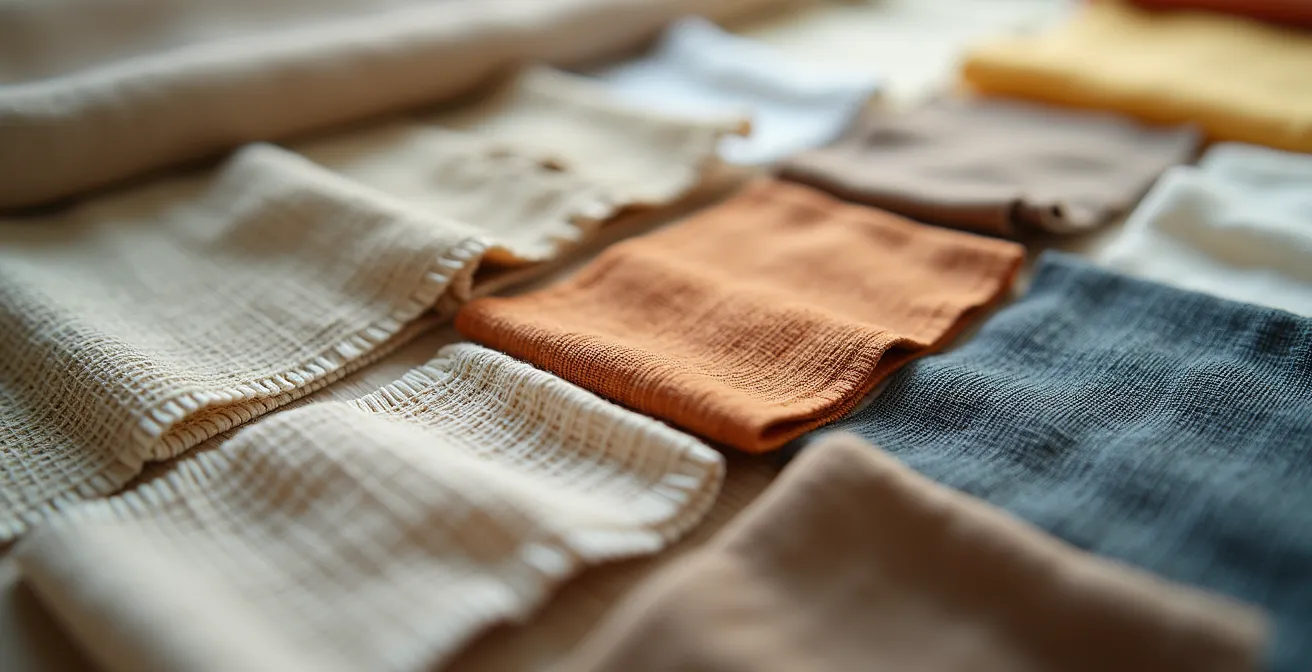
Beyond materials, a thorough audit questions a brand’s transparency. Vague claims of “ethical production” are red flags. A truly ethical brand will provide specific, verifiable information about its supply chain, including factory locations, worker conditions, and third-party certifications. To navigate this complex landscape, you must become adept at spotting the difference between genuine commitment and clever greenwashing. This practical checklist provides the essential questions to ask.
Your Action Plan: Identifying True Ethical Commitment
- Specificity of Claims: Does the brand provide specific details about factory locations and worker conditions, or do they use vague terms like ‘ethically sourced’?
- Certification Verification: Are their certifications from recognized third parties (like GOTS or B-Corp), or are they self-created logos with no external oversight?
- Lifecycle Transparency: Do they address the full lifecycle of the garment, including water usage, carbon footprint, and end-of-life disposal options?
- Material Traceability: Can the brand trace its raw materials back to their origin, or does their knowledge stop at the fabric mill?
- Commitment to Repair: Does the brand encourage longevity by offering repair services or guides, or is their model built on replacement?
Fast Fashion vs Slow Fashion: The Real Cost Per Wear
One of the most pervasive myths in fashion is that fast fashion is “cheaper.” While the upfront cost is undeniably lower, the true economic value of a garment is revealed through a metric known as Cost Per Wear (CPW). This simple calculation—dividing the item’s price by the number of times you wear it—exposes the false economy of disposable clothing. An economic analysis shows that a $200 sustainable piece worn 50 times costs just $4 per wear, while a $10 fast fashion top worn only once costs a staggering $10 per wear.
This concept fundamentally reframes purchasing decisions from short-term splurges to long-term investments. The superior materials and construction of slow fashion pieces mean they are designed for longevity, maintaining their shape and appeal for years, not weeks. A recent survey highlighted that while the average American spends about $1,445 annually on fashion, a staggering 61% feel the cost of living crisis prevents them from having their ideal wardrobe. This economic pressure is forcing a re-evaluation, pushing consumers towards pieces that offer better long-term value.
The following table breaks down the key differences, illustrating how the initial investment in sustainable fashion pays dividends over time through superior durability and value retention.
| Metric | Fast Fashion | Sustainable Fashion |
|---|---|---|
| Average Lifespan | 7-10 wears | 30-50+ wears |
| Durability | Loses shape and quality quickly | Maintains structure and integrity |
| Cost Per Wear (Example) | $20 (for a $40 item worn twice) | $5 (for a $200 item worn 40 times) |
| Material Quality | Primarily synthetic, low-grade | High-quality natural or recycled fibers |
Viewing your wardrobe through the lens of CPW is a cornerstone of aesthetic asset management. It shifts the goal from acquiring more items to acquiring the *right* items—those that will serve your personal style and your budget for years to come.
The Greenwashing Trap That Fools 60% of Shoppers
Greenwashing is the deceptive marketing practice where a company presents a misleadingly positive image of its environmental or ethical practices. In fashion, it has become an epidemic, preying on the good intentions of consumers. The core of the problem lies in the significant gap between what consumers say they value and how they actually spend their money. For instance, market research reveals that while 78% of consumers say they value sustainability, only 22% consistently pay a premium for it.
Brands exploit this “say-do” gap masterfully. They use vague terms like “eco-friendly,” “conscious,” or “green” without providing any concrete data to back them up. They launch a single “sustainable” capsule collection to create a halo effect over their entire, largely unsustainable, business model. This creates an illusion of progress that satisfies the consumer’s desire to do good without requiring them to change their purchasing habits or pay more.
A striking analysis of search data highlights this reality. While searches for terms like ‘sustainable clothing’ have increased dramatically, queries for ‘cheap clothing’ still outpace them by a factor of 5 to 1. This shows that while interest in sustainability is high, price remains the dominant decision-making factor for the majority. Greenwashing allows brands to capture the “interest” market with messaging while winning the “purchase” market with low prices. Escaping this trap requires skepticism and a commitment to seeking verifiable proof over vague promises. It means rewarding genuine transparency and punishing deceptive marketing with your purchasing power.
When to Invest in Timeless Pieces vs Seasonal Items?
Building a wardrobe that is both authentic and resilient requires a strategic allocation of resources. The most effective approach is the 70/30 wardrobe investment strategy. This framework dedicates the majority of your budget and closet space to a core of high-quality, timeless staples that form your “Personal Uniform,” while reserving a smaller portion for aesthetic experimentation with seasonal trends.
The 70% is your core investment. These are the foundational pieces that define your signature style—a perfectly tailored coat, a versatile pair of trousers, a high-quality white shirt. When selecting these items, apply the “100-wear test”: can you realistically envision wearing this piece over 100 times across multiple years and occasions? These are the items where quality, fit, and durable materials are non-negotiable. They are the bedrock of your aesthetic portfolio, designed to appreciate in personal value over time.
The remaining 30% is for aesthetic play. This is where you can engage with trends without becoming a fashion victim. Instead of investing heavily in a fleeting micro-trend, explore it through lower-commitment avenues. This could mean renting a statement piece for a specific event, thrifting a trendy item to give it a second life, or using accessories like bags and jewelry to add a seasonal accent without overhauling your entire look. This approach allows for creative expression and keeps your style feeling current, but it protects your core investment from the volatility of the trend cycle. It’s the sartorial equivalent of having a stable portfolio of blue-chip stocks supplemented by a small, speculative fun-fund.
Why Pre-Owned Luxury Is Outperforming the Stock Market?
The concept of “aesthetic asset management” moves from theoretical to literal when examining the pre-owned luxury market. Certain iconic fashion pieces are no longer just clothing or accessories; they are a recognized alternative asset class, with returns that can rival or even surpass traditional financial instruments. The most famous example is the Hermès Birkin bag, which has become a benchmark for fashion as an investment.
While the S&P 500 has historically delivered an average annual return of 8-10%, some analyses have shown select luxury goods performing even better. This is driven by a combination of masterful branding, controlled scarcity, and enduring cultural significance. These items are Veblen goods, where demand increases as the price rises because the high cost itself is a key part of their appeal. They are tangible symbols of status and taste that hold their value regardless of economic fluctuations.
The performance of these assets can be astonishing. For example, a 2024 report on the luxury market highlighted that the Hermès Sellier Birkin 35 saw its value retention soar to an incredible 250% of its retail price. As a stark indicator of growth, this was a 52% increase in value from the previous year. This isn’t an isolated case. The same report noted that The Row’s Margaux bag is now being called ‘the next Birkin’ after its resale value increased by 126%. This demonstrates that for a select few items, a wardrobe purchase can be one of the best-performing investments in a portfolio.
This phenomenon confirms that the principles of value, scarcity, and desirability are not just abstract concepts. They have a real, quantifiable financial impact. It is the ultimate expression of slow fashion, where a single, well-chosen piece can provide not just decades of style, but also a significant financial return.
Why Digital Scarcity Creates Value for Virtual Items?
The same logic of scarcity, authenticity, and status that gives a Birkin bag its immense value is now being applied in the digital realm. For a generation raised online, the distinction between physical and virtual identity is increasingly blurred. As such, digital fashion items—from NFT sneakers to exclusive skins in a metaverse—are viewed as legitimate status symbols, a key part of one’s holistic “aesthetic portfolio.” This is driven by Gen Z’s digital-native behavior; a recent study found that 77% of Gen Z now use TikTok for product discovery, with social media replacing search engines for nearly half the generation.
Value in the digital world is created through programmable scarcity. Unlike a physical item that can be counterfeited, a digital asset on a blockchain can have its authenticity and ownership history verified with absolute certainty. This creates a new paradigm of luxury. A brand can release a limited run of 100 virtual jackets, and the market knows with cryptographic proof that only 100 will ever exist. This is the same principle of controlled supply that luxury houses have used for centuries, but executed with technological precision.
This digital-first mindset means that owning a rare digital fashion piece can confer the same, or even greater, social capital as owning a physical luxury good. It signals that you are not only fashion-forward but also technologically savvy and part of a new cultural vanguard. For the modern aesthetic asset manager, a portfolio is no longer just what hangs in the closet; it includes the unique, verifiable assets that define one’s digital presence. The line between the closet and the crypto-wallet has officially been erased.
Key Takeaways
- Authenticity has shifted from a visual style to a strategic approach called “Aesthetic Asset Management.”
- Use the “Cost Per Wear” (CPW) metric to assess the true value of clothing, favoring long-term investment over cheap, disposable items.
- A 70/30 wardrobe strategy—70% timeless staples, 30% trend experimentation—balances stability with creative expression.
How to Adopt Viral Trends Without Looking Like a Victim?
In an age of radical authenticity, engaging with trends requires a delicate balance. The goal is to participate in the cultural conversation of fashion without letting your personal style be dictated by it. Blindly adopting every micro-trend that appears on your feed makes you a victim of the algorithm, erasing the very individuality you seek to express. The sophisticated approach is not to ignore trends, but to deconstruct them and integrate them on your own terms.
This can be achieved with the “Trend Autopsy” method, a strategic process for engaging with trends intelligently. It’s particularly vital when recent data shows that 97% of Gen Z shoppers cite social media as their primary inspiration for purchases. This method shifts your role from a passive recipient to an active editor. It involves breaking a trend down into its core components and deciding which, if any, align with your established “Personal Uniform.”
The process is a form of stylistic commentary, where you acknowledge the trend without fully submitting to it. By following these steps, you can borrow elements from the zeitgeist to keep your look fresh and relevant, while ensuring your core aesthetic remains intact and authentic.
- Deconstruct the Trend: Isolate the trend’s core elements. Is it about a specific silhouette (e.g., oversized), a color palette (e.g., dopamine dressing), a texture (e.g., sheer fabrics), or an overall mood (e.g., goth-core)?
- Select a Single Element: Choose only one element to integrate into your existing style. If the trend is baggy, 90s-inspired denim, pair it with your classic, tailored blazer, not the entire 90s-inspired look.
- Apply the Three-Wear Rule: Before acquiring any trend-based piece, mentally style it with at least three existing outfits from your wardrobe. If you can’t, it doesn’t belong in your portfolio.
- Use Low-Risk Gateways: Experiment with trends through accessories. A trendy bag, scarf, or piece of jewelry is a low-investment way to nod to a trend without compromising your core look.
Ultimately, shifting to a mindset of aesthetic asset management is the most powerful act of personal style. It’s a declaration that your identity is not for sale, not subject to fleeting algorithms, but is a carefully curated portfolio of your own making. To begin this journey, the first step is to look inward at what you already own and apply these principles of ethical and financial auditing.